
I was in Fermanagh yesterday evening, in the townland of Rotten Mountain. I went there for the eve of St Brigid’s Day (Imbolc), to céilí with some old friends, neighbours and acquaintances at Danny and Fidelma’s house. I’ve been there before, when Danny was kind enough to fill me in on a lot of local history and some significant local places that I’m hoping to write about in the future. Himself and Fidelma have a wonderful room set aside as a little museum of local history, but which is also used for céilí-ing (traditional socialising). Anyway, I got word that I’d be welcome to come along and join in for the gathering to make Brigid’s crosses. I couldn’t resist the opportunity.

It’s been a long time since I last made a Brigid’s cross – I have one that I made about 30 years ago in Derry. I can’t exactly remember what the circumstances of its making were, but I have carried that long-faded little cross about with me through various abodes and incarnations of my life.
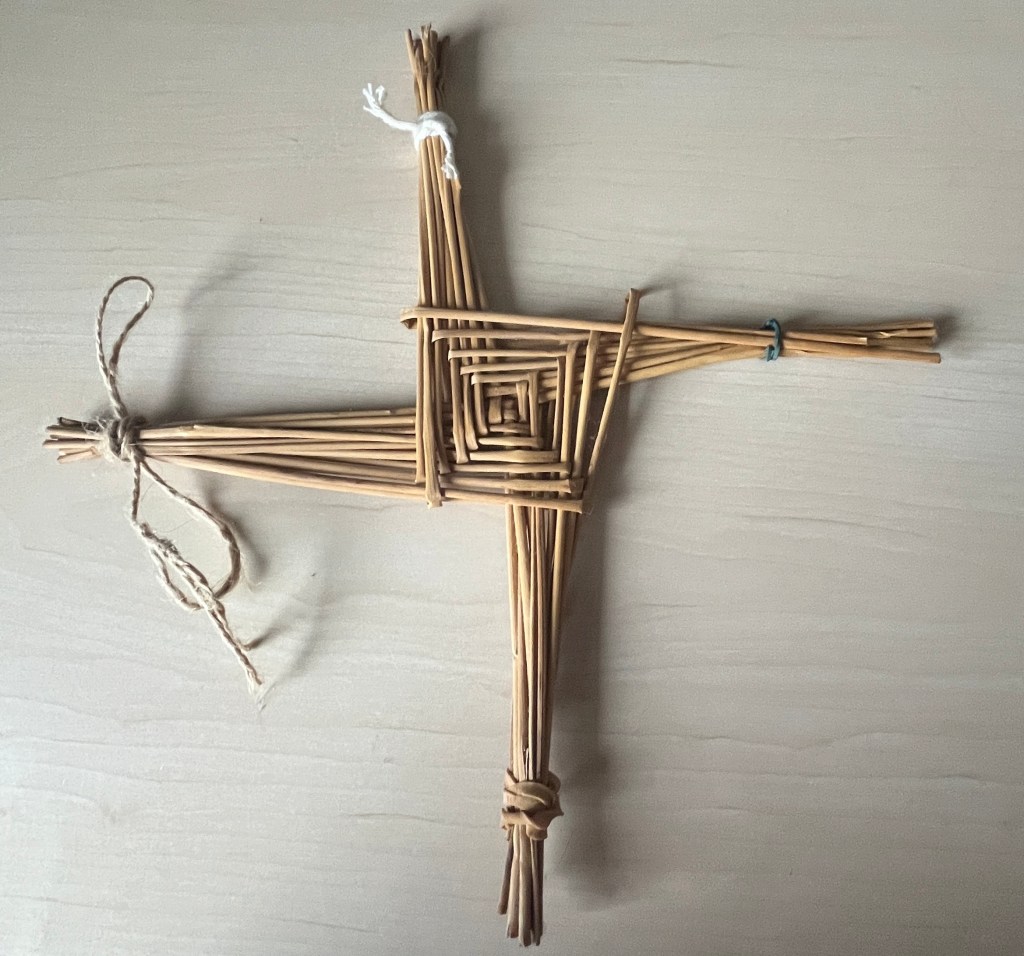
I’m not about to de-throne that little cross any time soon, but thanks to last night and all the people that were there, I now have several successors lined up. When I arrived in Rotten Mountain, I was immediately made welcome – you’d think I’d only been away for a week or two, instead of, essentially, decades. I was regaled with tales about my father, who was the local GP in that area for years and years, but everyone was focussed on the business of the evening. The central table was piled with rushes. There were fertiliser bags of them stacked about. But if I’d had any notion that I could sit back and enjoy the spectacle and skill of the makers – not a chance. I was there to make my own cross. So I did.

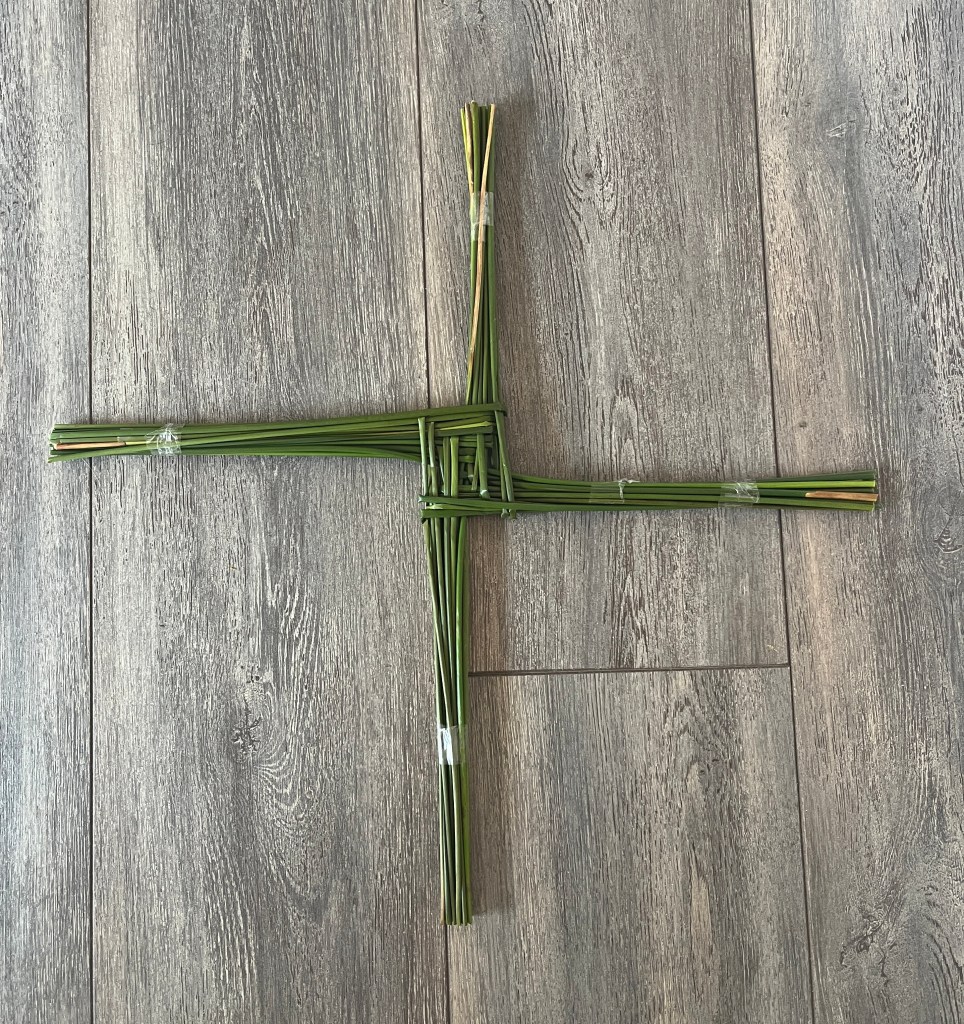
After a couple of, shall we say, sloppy attempts, JH took me under his wing and gave me the benefit of his expertise. I learned to line up the rush horizontally, and in front of the intersect that I held in my left hand, while reaching round with my right to fold the horizontal over. Then rotate – while avoiding putting your neighbour’s eye out with the waving end of a rush – and repeat. I was hampered by the lack of strength of my left hand grip – I overheard Danny instructing a grandson - a primary school child – to hold it tight to stop everything falling apart. I had the same problem. The central quadrangle – mine was far too mobile to be called a square – kept sliding and angling out of my grip. JH’s were as regular and symmetrical as if they had been machine-made. The layered lines of their centre piece were works of art. Mine – not so much. But as everyone kept making them, and the completed crosses were stacked on a surface, or sequestered into a bag – for distribution to friends and family – I began to realise that perfection wasn’t the point. Continuing the tradition was, the weaving and interweaving of time and generation. To make something that had grown out of the past but was shaped by one’s own self.
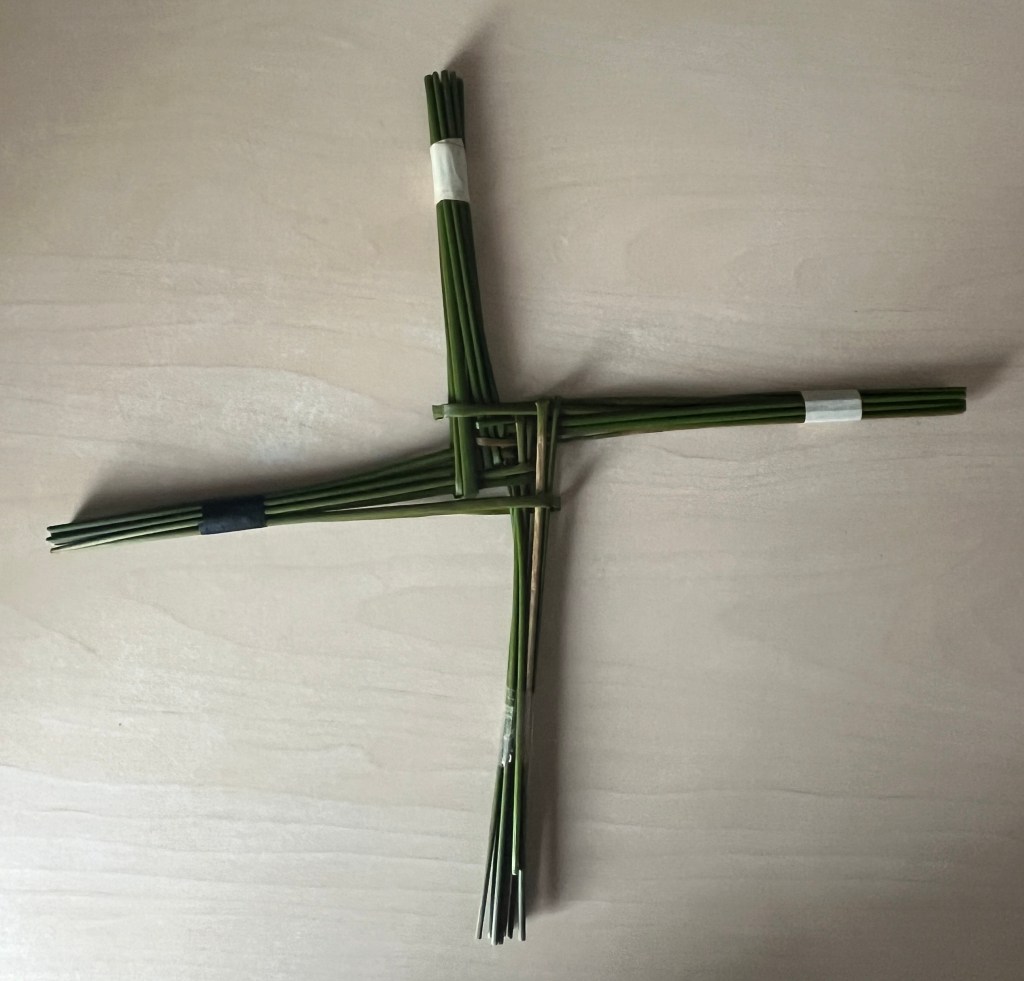
The evening was rounded off in the traditional way with tea and sandwiches, cakes and buns, and a lot of poetry and song. I had such a good time. I headed home under a huge waning gibbous moon with four fresh Brigid’s crosses. Thanks a million to Mena, and to Danny & Fidelma, and everyone there.

 mary-montague.com