John Montague: A Poet’s Launch

My late uncle, John Montague, is acknowledged as one of the greatest poets 20th century Ireland produced. While his work is loved and admired by many, I think it’s also fair to say that he’s also something of a well-kept secret, especially in his native Ulster. He was on the school curriculum in the Republic for many years. He was also Ireland’s first Professor of Poetry, a role set up following Seamus Heaney’s Nobel Prize in 1995. John was 10 years older than Heaney, and his Collected Poems came out also in 1995, which John regarded as execrable timing. It seemed to confirm his experience as the eternal outsider, always on the margins, never quite belonging. 
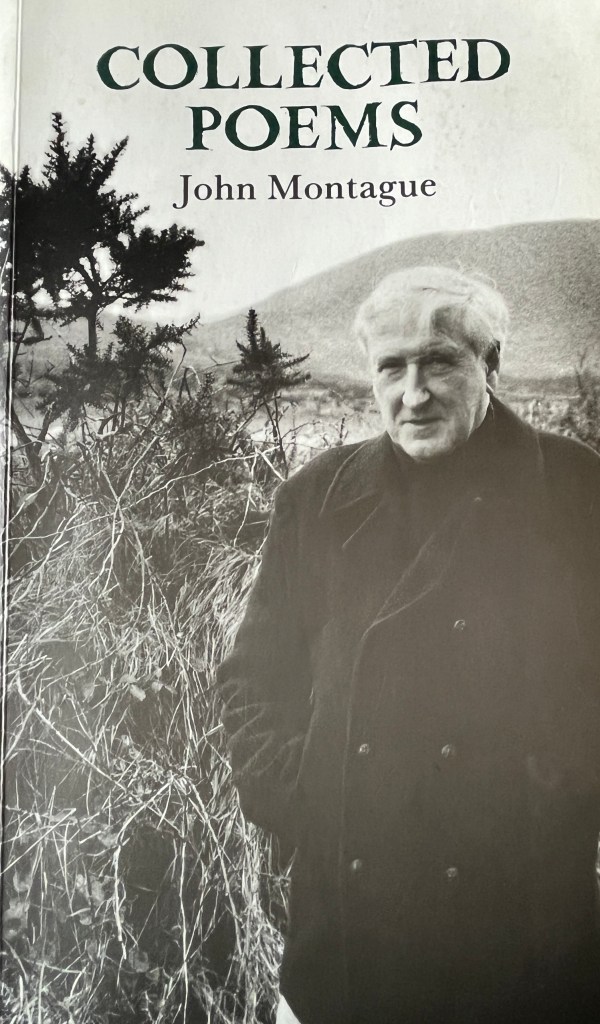
His mid-Ulster family was profoundly affected by the partition of Ireland. His parents emigrated to New York, where John was born in 1929. The children were sent back home in 1933, ahead of their mother’s return. John was separated from his elder brothers, who stayed with their maternal grandmother. However, John was parcelled off to be brought up in Garvaghey, Co Tyrone, by two of his father’s unmarried sisters.

His double separation from both his parents and then his brothers had a profound effect on John. His mother’s return a few years later to her mother’s house (his father stayed on in the US for many years), reinforced his sense of isolation from the rest of his birth family. While his aunts loved him deeply, his mother’s reluctance to retrieve him, no doubt with the best of intentions, wounded him. It was a wound he never fully recovered from; but he did, at some cost, channel and transform it into poetry. His work draws parallels between the fracture in his birth family and the partition of Ireland (and of Ulster). He’s also recognised as a major love poet and is a wonderful nature poet. He drew on his multiple identities – Irish and American, and Francophile. He lived in France for much of his adulthood, and he died there. He received a Chevalier de la Legion d’honneur, France’s highest civil award.

But it was to Garvaghey that he came home to rest. And it is in Garvaghey, that John Montague 1929-2016: A Poet’s Life, by acclaimed biographer Adrian Frazier will be launched next month. Professor Frazier offers an intimate and authoritative portrait of John, drawing on over 40 years of personal friendship and exclusive access to the poet’s private papers.
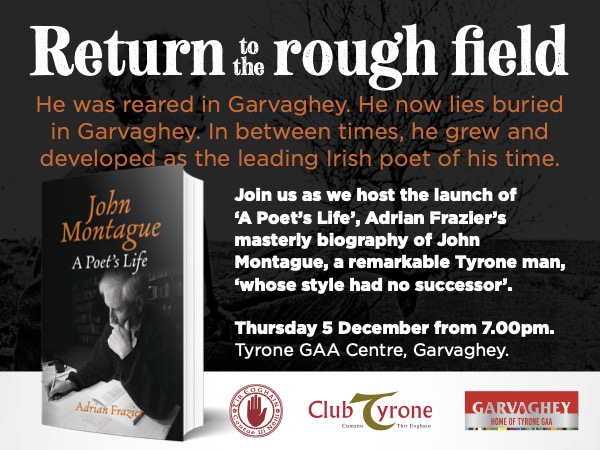
The Irish/UK edition is published by Lilliput Press (Dublin).  A US edition will be published by Wake Forest University Press in Spring 2025. 

A Poet’s Life will be launched in the GAA centre, Garvaghey, Co Tyrone at 7pm on Thursday 5 December 2024 – and all are welcome. 
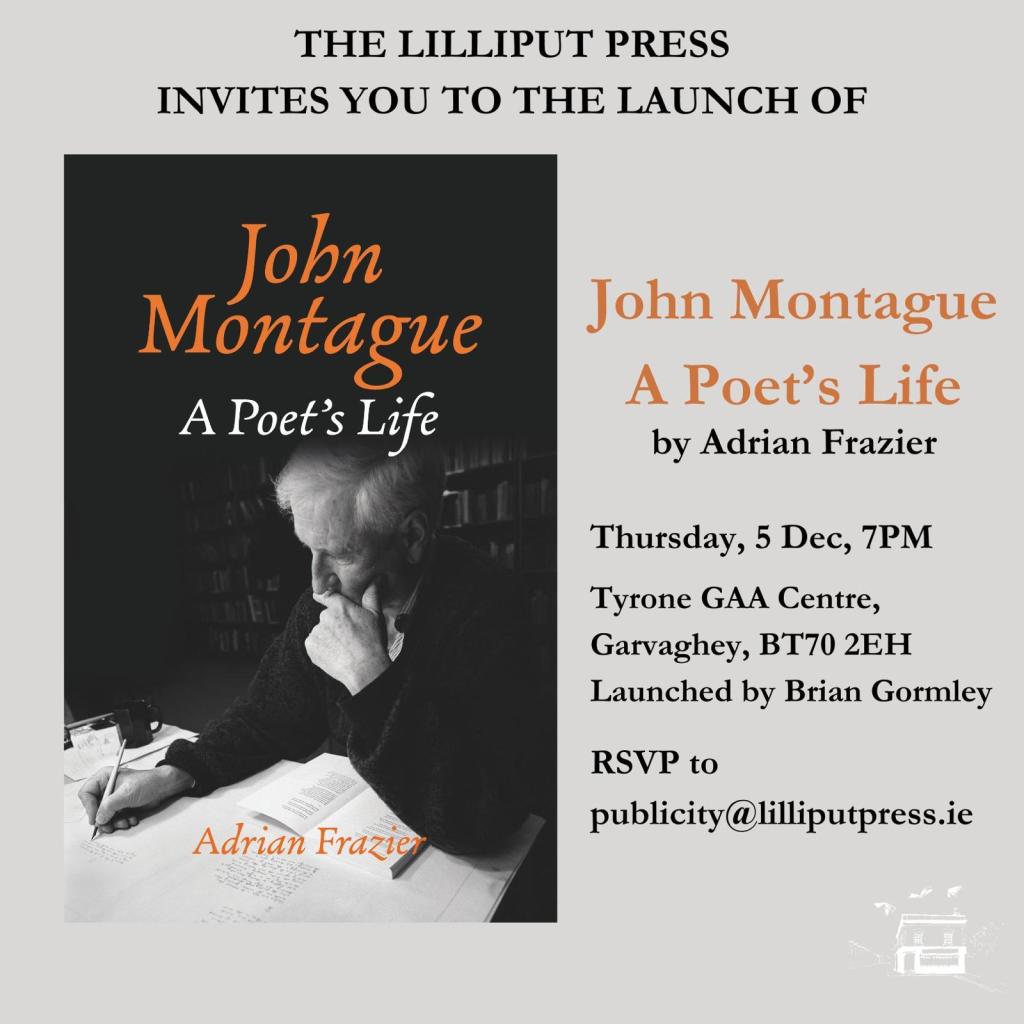
Lilliput Press’ INVITATION: everyone welcome

There are also launches in: Dublin, Dec 4th, 6pm Irish Writers Centre, Parnell Sq, Dublin, and in Galway, Dec 6th, 6pm, Charlie Byrne’s bookstore, Galway. 

Born out of pain and conflict, and despite all the difficulties of his life, transforming his experience into beautiful and often profoundly moving poetry, it’s good to have this telling of John Montague’s story being celebrated in the place that shaped him. 

Posted in Uncategorized | Tagged , , , , | Leave a comment

Autumn in Lagan Valley Park, Belfast

Oak sapling, possibly seeded during the mast year of 2022

My latest Guardian Country Diary came out yesterday. Some lovely comments on it, for which, many thanks! And thanks as always to the editor, Paul Fleckney.

Posted in Uncategorized | Leave a comment

Countryside – with Nicola Weir (and me!)

On the back of the publication of Under the Changing Skies, I was interviewed by Nicola Weir for Radio Ulster’s Countryside. The programme will be broadcast tomorrow at 2pm, but it’s already available on BBC Sounds if you want to sneak a preview.

As the blurb puts it:  And it’s BBC Northern Ireland’s Book Week and Nicola speaks to poet, writer and Queen’s University Lecturer, Mary Montague, about her contribution to a new anthology called ‘Under The Changing Skies’ – a collection of the columns written for the Guardian’s Country Diary – and she exposes the hidden world of the mallard!

You’ve only 29 days left to listen! So if you want to cut to the chase or listen on repeat, tune your ears into Nicola’s “50 Shades of Grey” intro in the first couple of mins. And then to solve that little mystery go to 46:28 and listen till after 54:00.

Thanks a million to Nicola for the opportunity to talk about the book and the joy (mallard sexual habits notwithstanding) it is to write for the Country Diary.

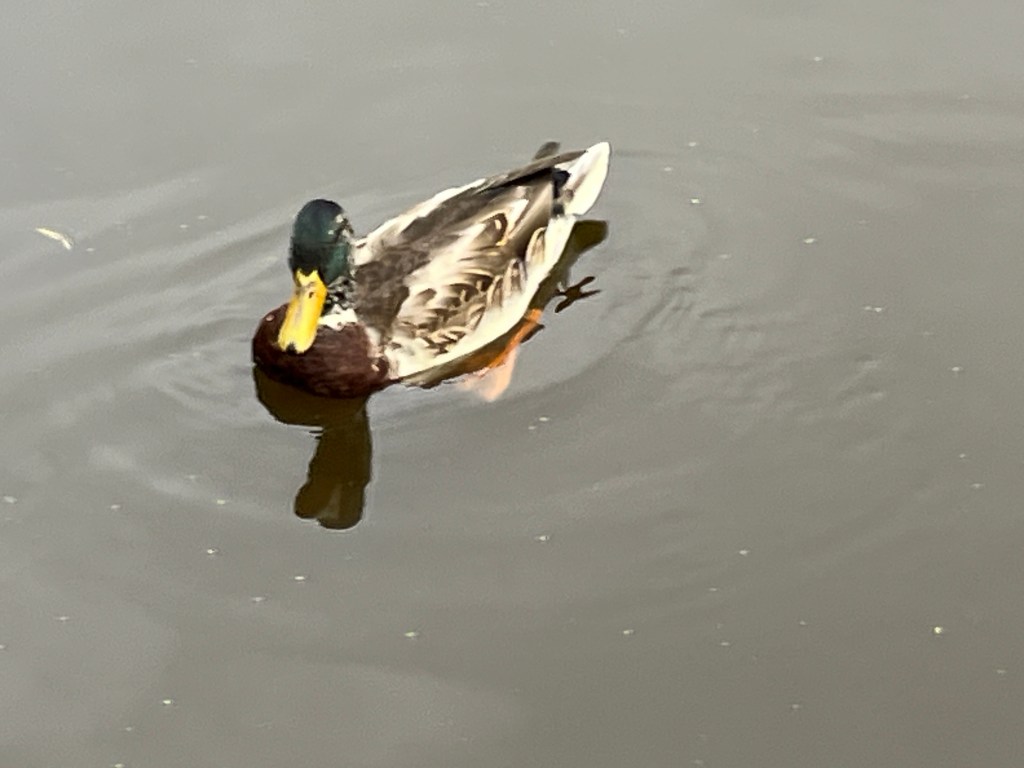
A young male mallard looking slightly the worse for wear …

Posted in Country Diary, Nature Writing, Poetry | Tagged , , , , , , , , , , , , , , , | Leave a comment

Ardnamurchan

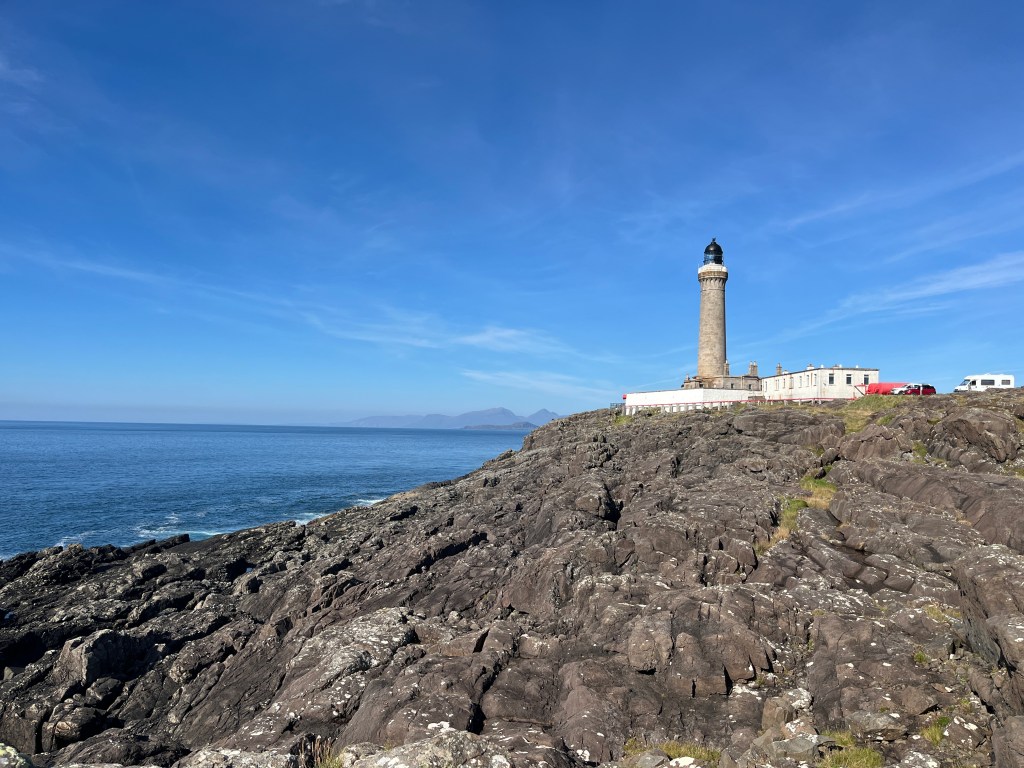
My latest Country Diary on recent efforts to get to Ardnamurchan lighthouse:

https://www.theguardian.com/environment/2024/oct/17/country-diary-at-last-we-reach-mainland-britains-most-westerly-point

Ardnamurchan light house with the knuckles of the Inner Hebrides in the background

Posted in Uncategorized | Leave a comment

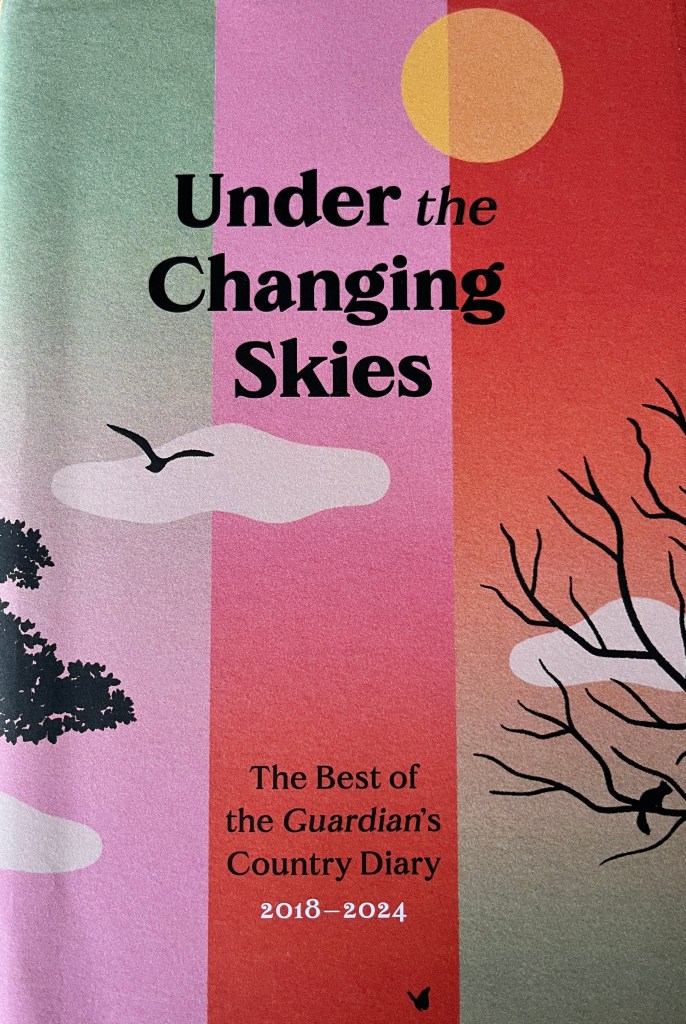
Under the Changing Skies

I was on holidays in Scotland recently (with a brief sojourn in England’s Peak District of which more anon). I came home to this:

Published by Faber & Faber; edited by Paul Fleckney (Guardian), with Mo Hafeez (Faber & Faber)

My contributor’s copy! What a pleasure and honour it is to be part of this collection published by Faber & Faber (under the Guardian Faber partnership). The book is a delight. It is organised month by month, and my intention is to read it in that way – although I’ve already dipped in and out and rushed through September into October. It is marvellous to read all the different voices and perspectives and subjects, and (pinching myself) to find myself in such august company. I’m not just saying it because I’m in it, but this is an important publication. I’d like to thank the Country Diary’s editor, Paul Fleckney, and Mo Hafeez. Commissioning Editor at Faber & Faber.

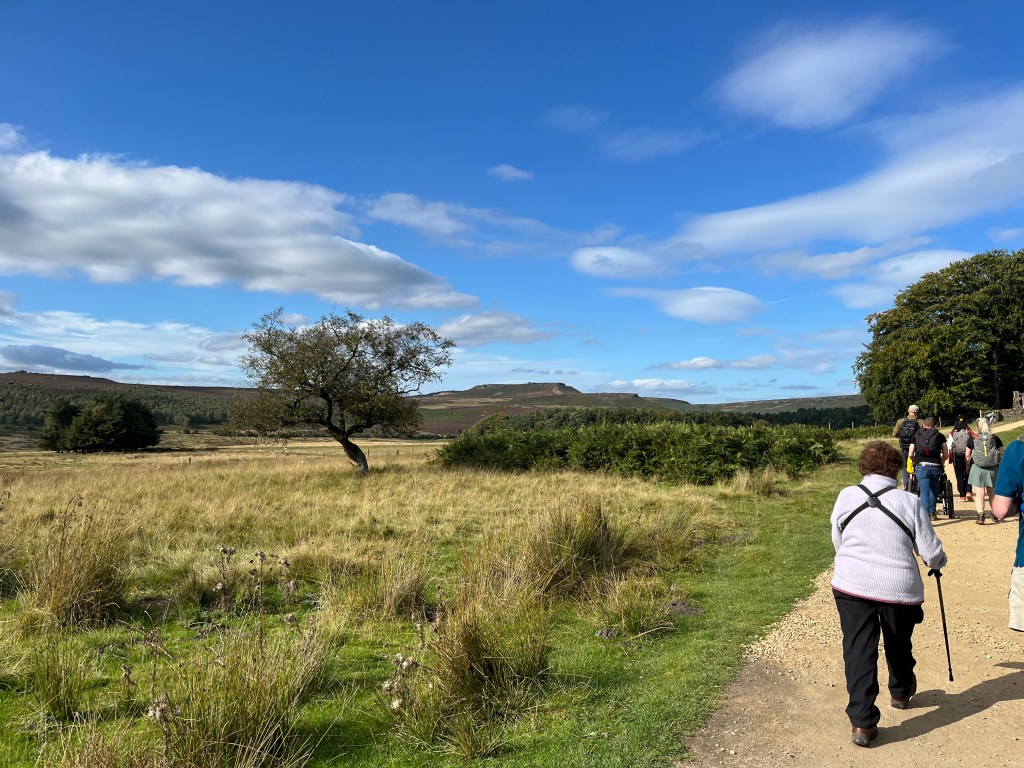
Pre its launch into the world (which is formally tomorrow, although you can still pre-order up to the end of today, as far as I’m aware), there was a meet-up to celebrate. Paul chose the Peak District as a reasonably central place (and convenient to almost nobody, as far as I could make out). As it happened, I was in Scotland over that period of time. This had advantage of allowing me to travel down by train (and do a little work on said trains), thus avoiding flying, which I am very happy about. (I’m doing my best to fly as little as possible for the rest of my life. So far, it’s been about five years without). About 20 of us showed up for a desultory ramble and get-together, and I really enjoyed putting faces to names and establishing more personal connections to my Country Diary colleagues.

Country Diarists out and about in the Peak District

Finally, because the regular contributions are the source of the book, here, somewhat late as I was away when this came out, is my latest. I’d like to thank Graham Day for all his help with sources and material, and the lovely group of botanists who introduced me to the tall sea lavender, Limonium procerum procerum, of the Lecale coast.

Tall Sea Lavender still growing in Lecale
Posted in Uncategorized | Tagged , , , , | Leave a comment

The Irish Hare

Here’s my latest offering for The Guardian’s Country Diary. It was a wonderful subject to write about and I have come to appreciate and delight in our native hare even more than I did before.

I would like to thank Eugene Cooney of the Irish Coursing Club and Dr Neil Reid of Queen’s University for confirming the species ID and the absence of any record of the brown hare from that part of Donegal.

Many thanks to Paul Fleckney, editor of the Country Diary, for directing my initial ideas toward this subject, and his guidance in writing it.

I’d also like to thank Teresa and Cahir Doherty for yet another wonderful stay in John Ons cottage in Malin Head; and for their wealth of local knowledge.

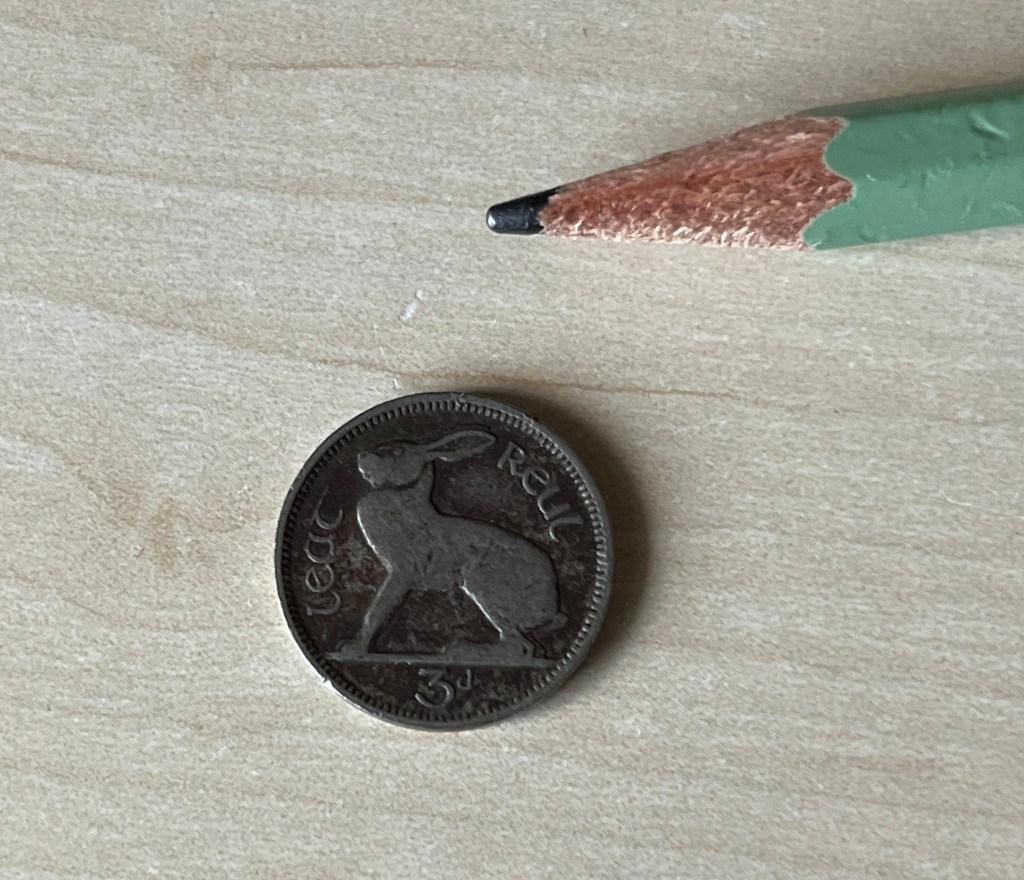
Finally, I didn’t get a photo of “my” hare but I found this little coin instead. And while reading around the subject, I came across this fascinating article about the minting of the Irish coins not long after the Free State was founded. I still remember the mixture of coinage that could find their way into a hand in my border county childhood. But it’s lovely to see the Irish hare commemorated and to be reminded that it has always been treasured.

Posted in Uncategorized | Leave a comment

A plague among the ash trees

I was away for a while in Malin Head, Co Donegal (see souvenir photo), so I’m late posting this. However, I want to thank John Maguire for inspiring and facilitating this particular Country Diary; and Paul Fleckney, editor, for accepting and shepherding the idea.

View from Malin Head

Posted in Uncategorized | Leave a comment

Catching up

I’ve had a busy few weeks. Amongst other things, I was in the north west and one of the things that came out of that trip was my latest Country Diary, which was published last Friday in The Guardian. Many thanks to Jim Gregg for helping me identify the focus of all the excitement, and of course to the Country Diary editor Paul Fleckney, especially for the stunning photograph of a gar/needlefish.

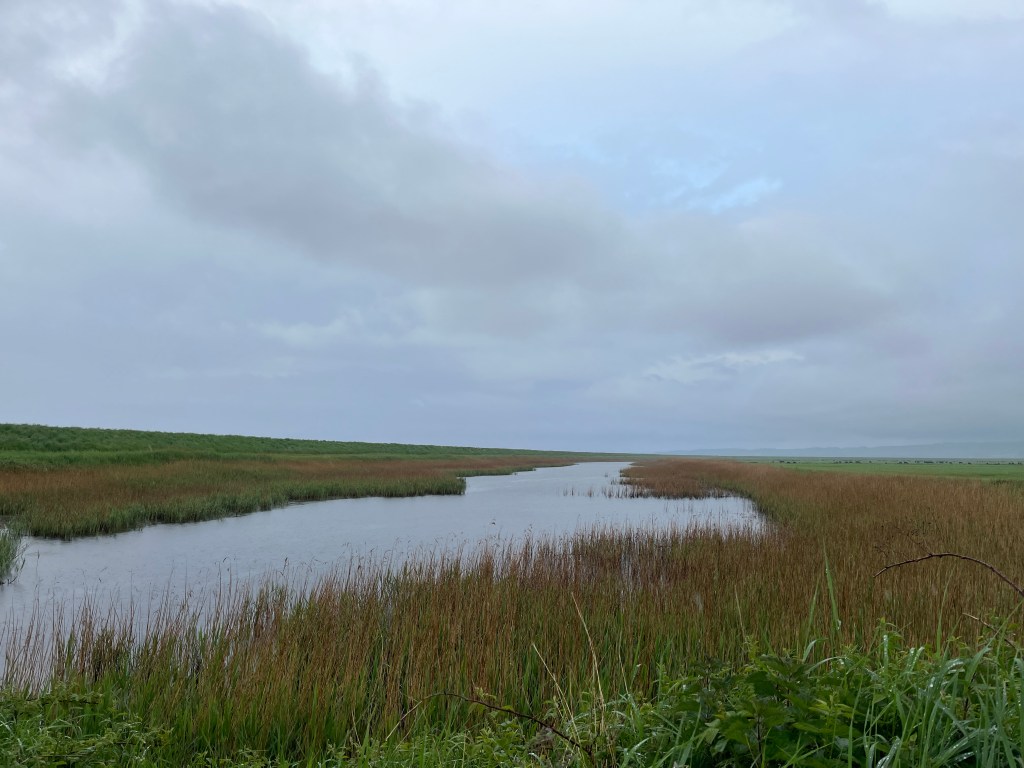
I always love a visit to the reed beds at Donnybrewer and the views over Lough Foyle aren’t bad either.

Reedbeds at Donnybrewer, Co Derry.

Sunrise over Lough Foyle

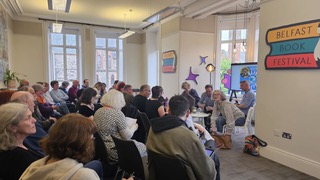
Another recent event, as part of the Belfast Book Festival, was the conversation on Nature Writing & Creativity, with ecologist Conor McKinney of, amongst many other things, Wild Belfast; fellow Guardian Country Diarist, as well as award winning nature and science writer, Lev Parikian; and the brilliant poet, Moya Cannon. It was an honour and a joy to chair this conversation among three very different but equally passionate advocates for nature, and to listen to them discuss how we create and respond to “nature” in the current times. I certainly hope there are more of these “hybrid” science and arts events. Thank you all at the Belfast Book Festival, especially Sophie Hayles and Laoise McWilliams, and the Crescent Arts Centre.

That’s Conor, Lev & Moya, keeping everyone enthralled. I’m the one footering in my bag!

Finally, my last creative writing workshop for the time being was delivered on Saturday. It was at a favourite venue of mine, the MarketPlace Theatre and Arts Centre, Armagh. The workshop was on memoir writing, and I was delighted with the attendance, and the great feedback from the participants. It’s always very gratifying when people feel that they have had a useful and rewarding experience. So thanks everyone for your engaging participation and your kind feedback. Hoping to get it up on the relevant page of this site asap.

Posted in Uncategorized | Leave a comment

How We Got Here, Where We’re Going

My friend Micheal McCann, a brilliant young poet from Derry, has just launched his first full collection, Devotion, with Gallery Press. Here he reads the poem “How We Got Here, Where We’re Going”, from the collection. As he says, this is a found poem taken from this book, Biological Exuberance, which I first came across in the university library, while I was doing my PhD here in Belfast.

Rather disarmingly, the poem is dedicated to me. Thank you, Mícheál!

Posted in Uncategorized | Leave a comment

Get thee to the Ulster Museum

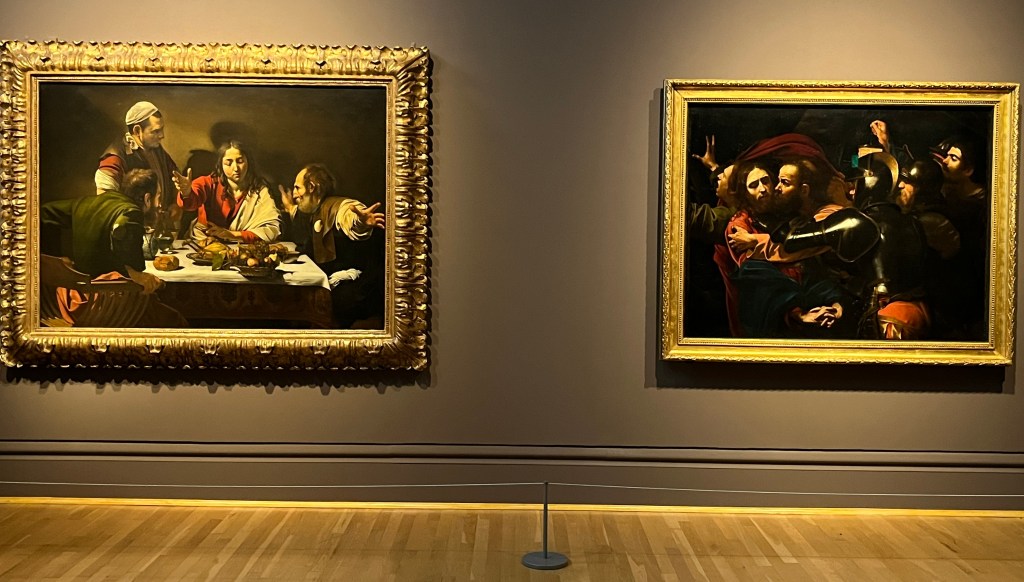
I was there this morning to see these. The two Caravaggios, We were first viewers to arrive at 10am, and for about five glorious minutes had the room to ourselves.

The attendant filled us in on the details that brought these two paintings together into the same physical space almost for the first time since they were painted in 1601 (for The Supper at Emmaus) and 1602 (for The Taking of Christ). I’ve seen both of them before in the National Galleries of Dublin & London, and of course I spent a huge amount of time studying The Taking of Christ when I wrote my poem inspired by that painting; but there was something magical about seeing the two together in the natural light with just a single line of lamps at ceiling level to softly highlight them. Over four hundred years and they still look so fresh and raw and muscular.

With the western cultural reflex of reading left to right, initially I wondered about the placing of the paintings from L-R in non-chronological order in terms of the Biblical scenes they represent. Of course, the resurrected Christ in Emmaus has been restored to the visage of a very young man. Nevertheless, in narrative terms, Christ’s seizing in Gethsemane precedes that of his resurrection. Perhaps it because we entered the room on the right? So one’s gaze would, arguably, first meet Taking. And then the gaze would follow on across the unseen crucifixion to the relief of recognising the risen Christ. The order couldn’t be that of chronology of their creation, because that’s reversed with respect to the Biblical scenes they represent. Furthermore, Caravaggio’s use of chiaroscuro is, to me, even more developed in Taking compared with his admittedly superb use of it in Emmaus.

The beauty of seeing these painting now however, compared with when I first saw each of them is that today I have an iPhone. And you’re allowed to take photos. As I kept taking various parts of each painting, my eye was drawn more and more to the characters. Obviously Caravaggio used the models that were available to him at the time, including, famously, himself as the young man lifting the lamp at the rear of the mob in Taking. I stared at the captain of the guard with the crest on his helmet in Taking. Was he Cleopas of the outspread arms in Emmaus? And is the guy serving the table in Emmaus an older version of Caravaggio? They aren’t exactly alike, but an artist who can portray a 15-year (at least) age difference in his main character (Jesus) could surely do it for himself: a receding hairline; the gaunter face. And there’s the bemused nonplussedness of this servant in Emmaus, his hands thumbed into his belt. He doesn’t have a clue, or is certainly not overly impressed, at the astonishing moment that Caravaggio has just captured: the recognition of Christ by Luke and Cleopas in the breaking of the bread.

What I love about Caravaggio’s take on that moment is the millisecond of a difference in that recognition by the two pilgrims (I also love the shell representing the Camino de Santiago; and the continuity from Jesus’ own day through Caravaggio’s right to the present, that that little symbol gathers to itself). Jesus’ right hand is raised suggesting the conventional blessing. However, it can also be interpreted as having just lifted from the piece of bread broken for Luke on Christ’s right, because Luke’s astonishment seems to be slightly behind that of Cleopas’ – Luke has had only time to grip the arms of his chair in reaction. Cleopas, however, having had the bread broken first for him, has had a millisecond longer to fling both his arms wide, thus embracing the whole of the moment. Yet again, using this gesture of Christ’s, what Caravaggio has done is embody the sacred in the ordinary and the quotidian. Literally in time. I found myself close to tears at the sight of it.

Because I was paying such close attention to the hands (oh, I could say more about Jesus’ tightly gripped and braced hands in Taking versus his relaxed and open hands moving gracefully through the air in Emmaus), I then noticed the trompe d’oeil of John’s stretched arms in the Taking and of Cleopas’ in Emmaus. I’ve always thought the portrayal of John’s terror magnificent, if a little ungainly – his left arm disappears out of the frame into the darkness, the flounce of his cloak forms a canopy for the treachery of Judas’ kiss as the pallid fists of the second soldier grip on the tail end of it – but it’s that upraised right arm with its splayed fingers that make a megaphone for John’s scream that has always gripped me. But now I wonder, is this the reason for the L-R order of the display? Is John’s left arm reaching not into but through the darkness where it has the possibility of gripping Cleopas’? The splayed hands of each of them seem to suggest the possibility. Those fingers look as if they could lock, not defensively and protectively as Jesus’s do in Taking, but to hold each other steady for the horror of the interval between. Or more precisely, for Cleopas’ to reach back for John’s to hold him steady.

Did the curator display these two works of art like this so that that Cleopas can reach back to help John across the chasm of death and darkness into the light of the resurrection?

Given that Caravaggio painted these two works for the same family in a relatively short space of time, could that have been, consciously or unconsciously, his own intention?

Whatever the reason for the order of the display, the fact that paintings from another age can speak so viscerally, both individually and together, is surely a sign of Caravaggio’s continued hold on the imagination. What an artist. These two works, and the possibilities of the conversation between them, are not to be missed. I will be back for more.

Posted in Uncategorized | Leave a comment