Lá Fhéile Bríde

I was in Fermanagh yesterday evening, in the townland of Rotten Mountain. I went there for the eve of St Brigid’s Day (Imbolc), to céilí with some old friends, neighbours and acquaintances at Danny and Fidelma’s house. I’ve been there before, when Danny was kind enough to fill me in on a lot of local history and some significant local places that I’m hoping to write about in the future. Himself and Fidelma have a wonderful room set aside as a little museum of local history, but which is also used for céilí-ing (traditional socialising). Anyway, I got word that I’d be welcome to come along and join in for the gathering to make Brigid’s crosses. I couldn’t resist the opportunity.

Making Bridget’s Crosses in Rotten Mountain

It’s been a long time since I last made a Brigid’s cross – I have one that I made about 30 years ago in Derry. I can’t exactly remember what the circumstances of its making were, but I have carried that long-faded little cross about with me through various abodes and incarnations of my life.
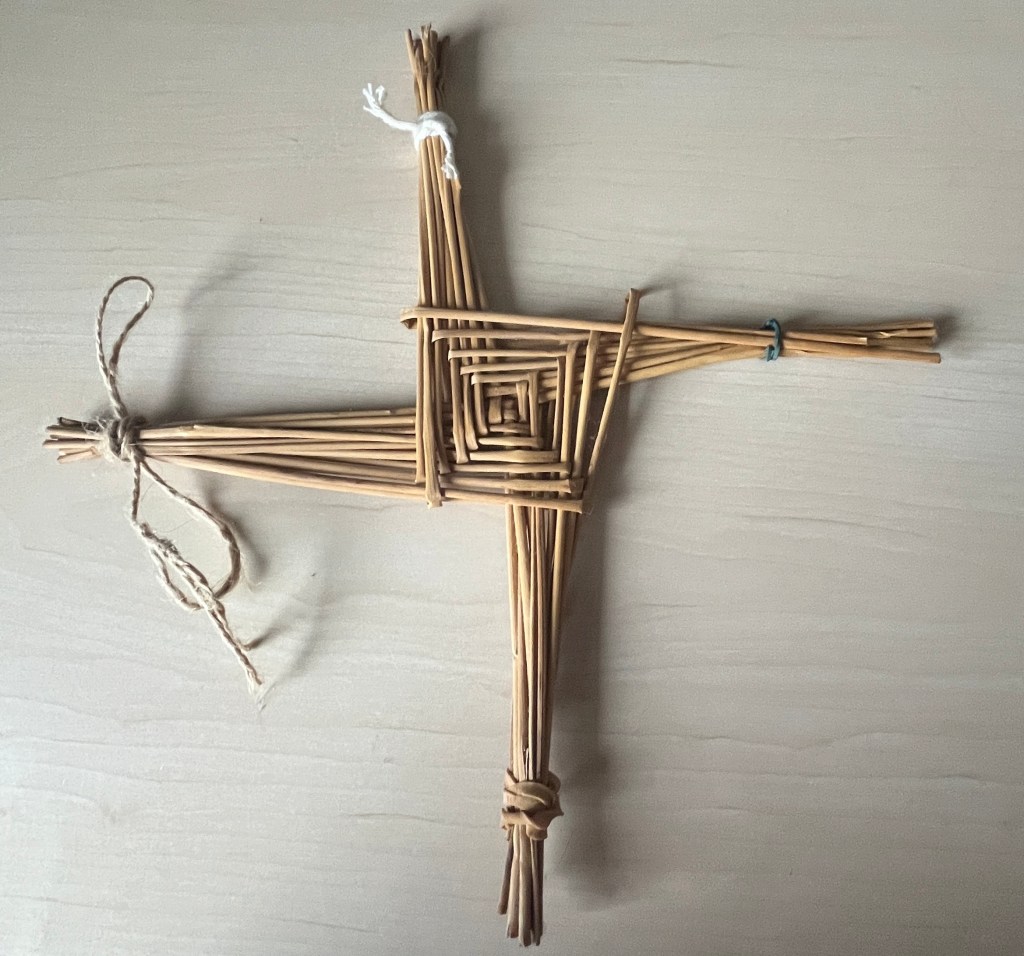
My first Brigid’s Cross c. 1994

I’m not about to de-throne that little cross any time soon, but thanks to last night and all the people that were there, I now have several successors lined up. When I arrived in Rotten Mountain, I was immediately made welcome – you’d think I’d only been away for a week or two, instead of, essentially, decades. I was regaled with tales about my father, who was the local GP in that area for years and years, but everyone was focussed on the business of the evening. The central table was piled with rushes. There were fertiliser bags of them stacked about. But if I’d had any notion that I could sit back and enjoy the spectacle and skill of the makers – not a chance. I was there to make my own cross. So I did.

JH’s mastery …

After a couple of, shall we say, sloppy attempts, JH took me under his wing and gave me the benefit of his expertise. I learned to line up the rush horizontally, and in front of the intersect that I held in my left hand, while reaching round with my right to fold the horizontal over. Then rotate – while avoiding putting your neighbour’s eye out with the waving end of a rush – and repeat. I was hampered by the lack of strength of my left hand grip – I overheard Danny instructing a grandson - a primary school child – to hold it tight to stop everything falling apart. I had the same problem. The central quadrangle – mine was far too mobile to be called a square – kept sliding and angling out of my grip. JH’s were as regular and symmetrical as if they had been machine-made. The layered lines of their centre piece were works of art. Mine – not so much. But as everyone kept making them, and the completed crosses were stacked on a surface, or sequestered into a bag – for distribution to friends and family – I began to realise that perfection wasn’t the point. Continuing the tradition was, the weaving and interweaving of time and generation. To make something that had grown out of the past but was shaped by one’s own self.
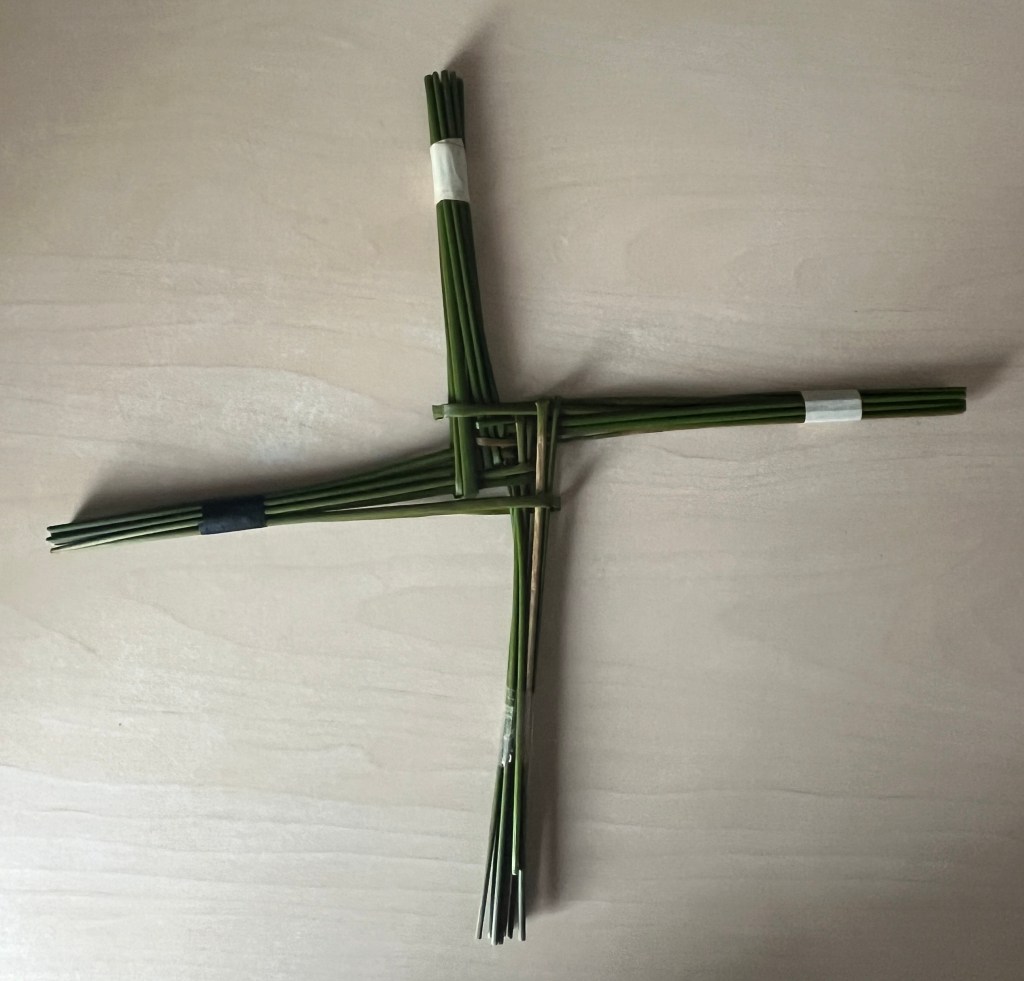
Exhibit A: a study in miniature (M.Montague)

The evening was rounded off in the traditional way with tea and sandwiches, cakes and buns, and a lot of poetry and song. I had such a good time. I headed home under a huge waning gibbous moon with four fresh Brigid’s crosses. Thanks a million to Mena, and to Danny & Fidelma, and everyone there.
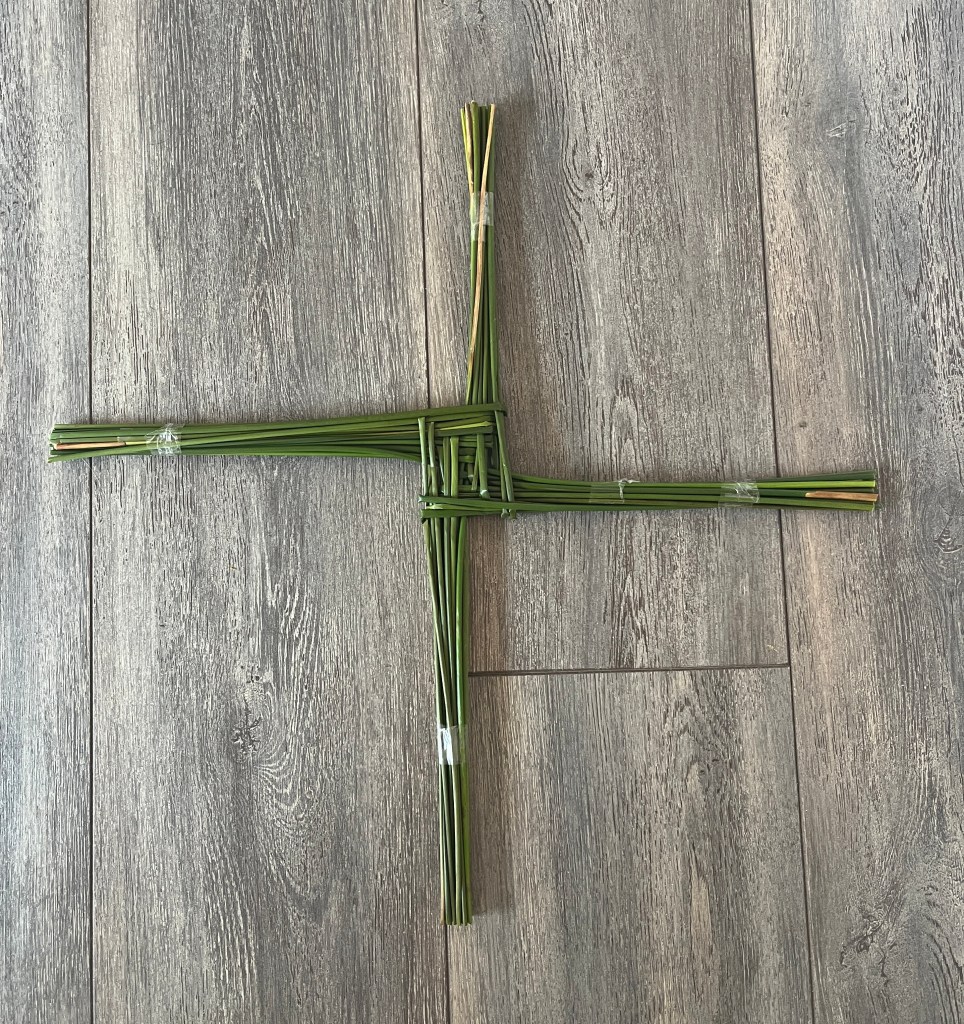
Exhibit B: later work, on a larger scale (M. Montague).
Posted in Uncategorized | Leave a comment

Correspondences: Collaboration, Noise & Innovative Poetries

Just wanted to give a shout-out for this cross-pollinating poetry event, which I’m really looking forward to on:

Friday 23 February 2024

Time 7:00 PM – 9:00 PM

at the Crescent Arts Centre in Belfast.

Nothing like a bit of Nick Cage – or not! – to start the weekend.

Posted in Uncategorized | Leave a comment

Requiem – auf Deutsch

My poem Requiem had the honour of being selected for publication by the late Eavan Boland during her editorship of Poetry Ireland Review. It was published in the last volume of Poetry Ireland Review (129) of 2019. It was subsequently chosen for publication in the groundbreaking collection Queering the Green (Lifeboat Press 2021) by editor Paul Maddern.

Now Requiem has been published in German! It has been translated by Gabriele Kreuzner and is given prominence in Demenz das Magazin, a publication for people with dementia, and their carers and advocates. The hard copy of the magazine arrived on my mat over the weekend (accompanied, it has to be said, by much, presumably post-Brexit, paperwork).

This translation and publication has a special place in my heart. My late father, who is the subject of Requiem, suffered from vascular dementia. My late mother also had dementia, most likely Alzheimer’s disease (there was no post mortem, so any plaques were unidentified, but she fitted the profile). So it is particularly affirming that my poem has spoken across geography and language. Dementia is such a horrible condition that robs us of our loved ones before they die, and robs them of their former selves. But there is a little comfort in the thought that my parents may be resonating in the minds of others and not just in my own. And that my Dad continues to walk Rosnowlagh Strand as stubbornly as he did that long ago September afternoon

Many thanks to Cherry Smyth for suggesting the translation to Oliver Schulz, to Oliver himself for steering it, and to Gabriele for her faithful rendition. I am truly moved by this honour.

Posted in Uncategorized | Leave a comment

Happy New Year

#ACNISupported #NationalLottery

I was so busy before Christmas that I didn’t get the chance to announce some happy news. I was successful in my application for a “Support for the Individual Artist” award from the Arts Council of Northern Ireland. I’m going to use this grant to support my reflections on the natural world in the form of series of essays. I am so grateful to the ACNI for this award and am buoyed up at the thought of exploring the natural world in a new form.

Posted in Uncategorized | Leave a comment

A Tale of Three Churches

My latest Country Diary for The Guardian is about stories embodied by three churches, in one of my favourite parts of the world. And about birds, of course.

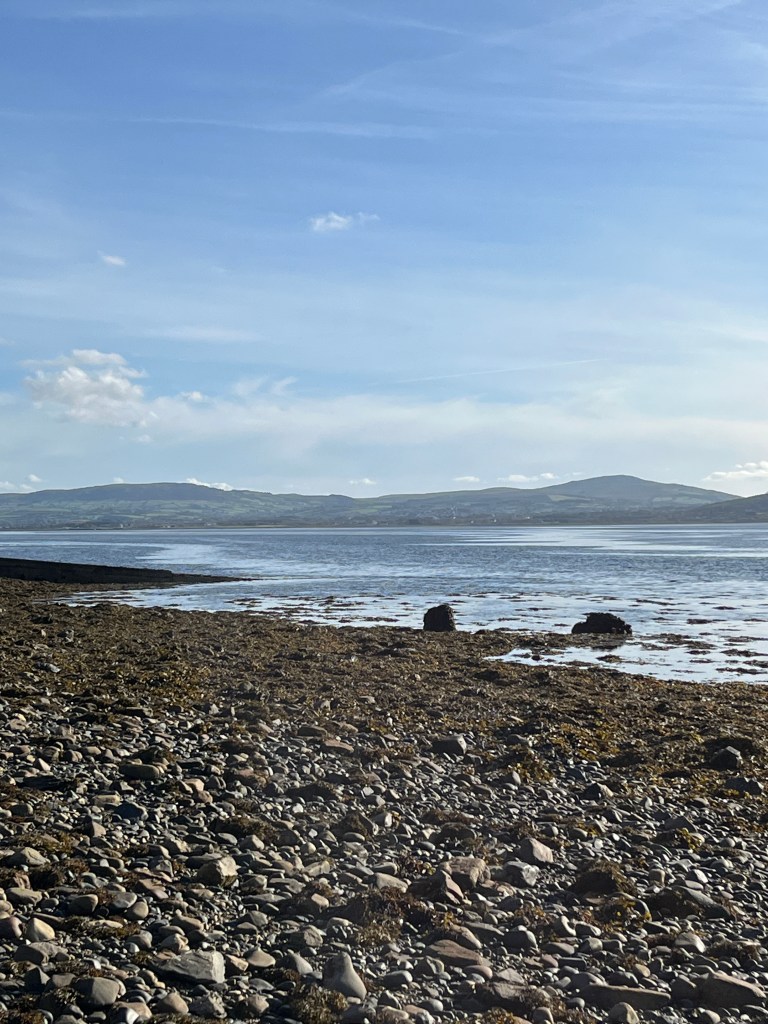
Trawbreaga Bay, Co Donegal

Posted in Uncategorized | Leave a comment

The Dollaghan of the Six Mile Water

The dollaghan is a variety of brown trout, unique to Lough Neagh, and “islanded” there since the last Ice Age. This is my latest Country Diary, in which they are the key that unlocks a mysterious world, constantly under threat, and even more so given the current crisis at Lough Neagh.

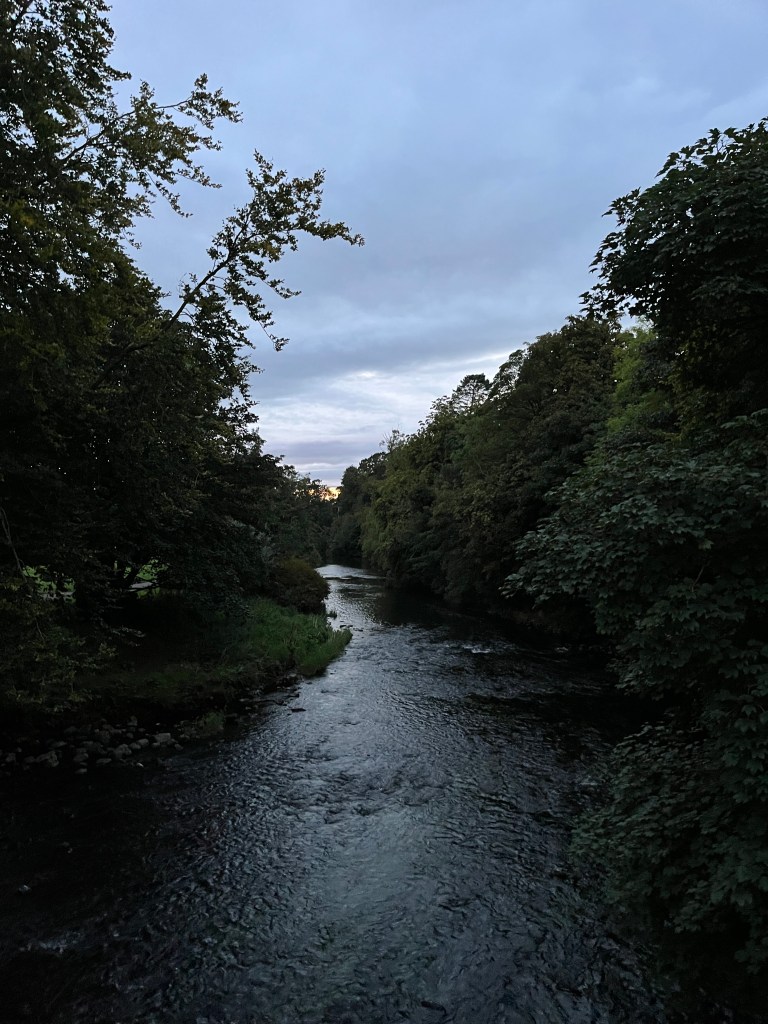
The Six Mile Water River

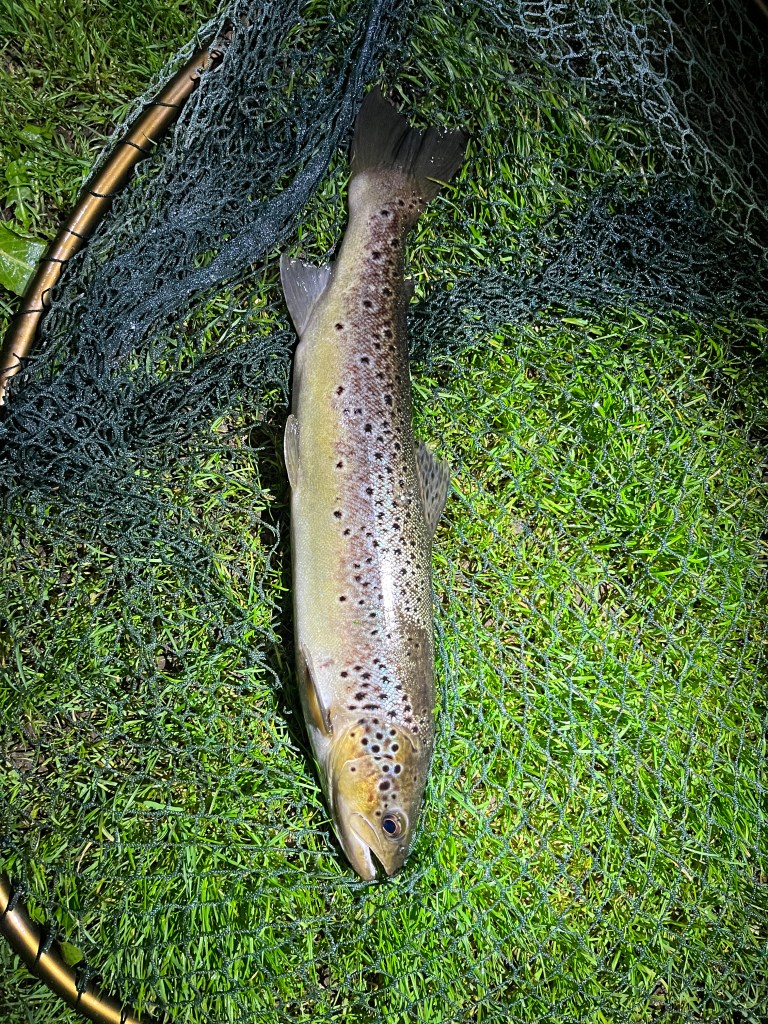
Many thanks to: David Kennedy, Development Officer of Crumlin & District Angling Association (and addressing some of the issues that anglers are contesting in the second letter here); Jim Gregg of the Six Mile Water Trust, who took me under his wing, allowing me to experience a magical evening; as well as Micheal Martin, with Andy and Ethan. The dollaghan are such a beautiful fish. Here’s the one that was caught that evening in all its freckled gunmetal and gold.

A dollaghan, weighing about one and three quarters pounds

Many thanks also to the Country Diary editor, Paul Fleckney

Posted in Uncategorized | Leave a comment

Sixmilewater and Lough Neagh

Monday saw me at Sixmilewater River near Antrim Forum to follow for the short walk to its mouth at Lough Neagh. I was very conscious of Sunday’s wake at Ballyronan for the Lough, which, unfortunately, I was unable to attend. Today, as I write this, there has been yet another, no doubt futile, attempt to recall our local assembly to address the problem of the pollution of the lake, which not only sustains – or did – such a rich ecosystem, but also supplies 40% of NI’s water supply. A small comfort that two archbishops have stepped in to fill the political void. For the moment, it does indeed seem that prayers are the only option left to us.

Back to Monday. I was dreading what I would find when I reached when I reached the Lough. However, I’m in the process of drafting another Guardian Country Diary, based around the river, so I felt I couldn’t just avoid the issue that has dominated our local news. Not that the Sixmilewater hasn’t had its own problems with multiple fish kills over the years, including one that a local fisherman told me about on 12th Sept. Here are some in no particular order:

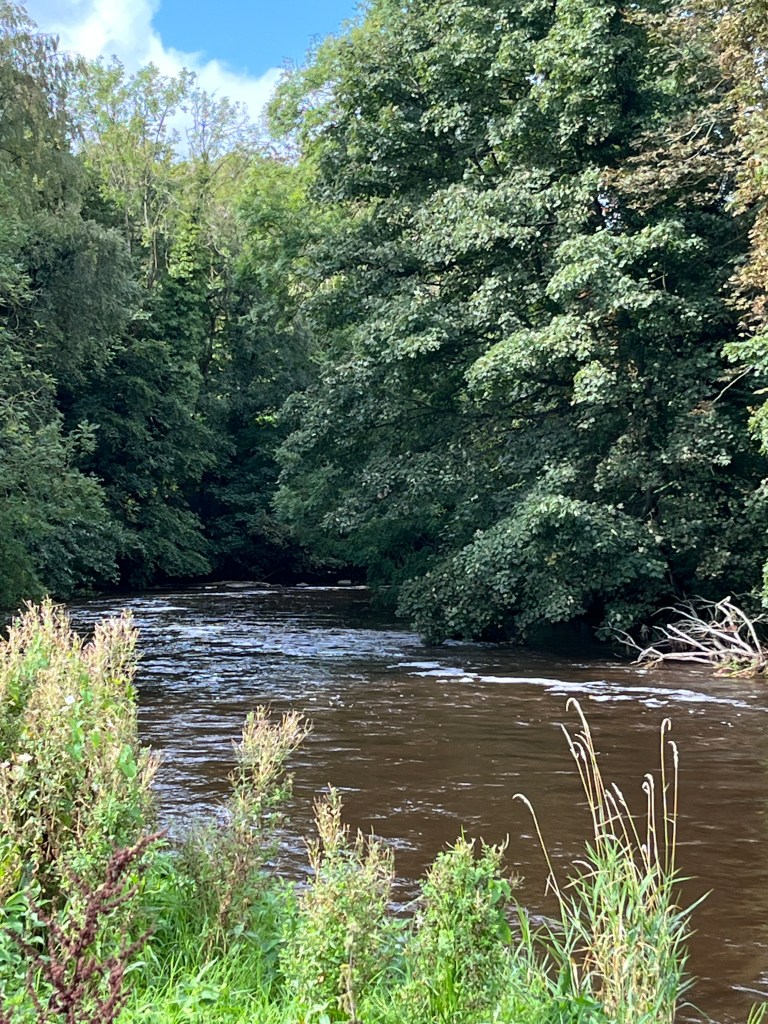
The river was swollen and flowed, like Eliot’s brown god, with implacable urgency:

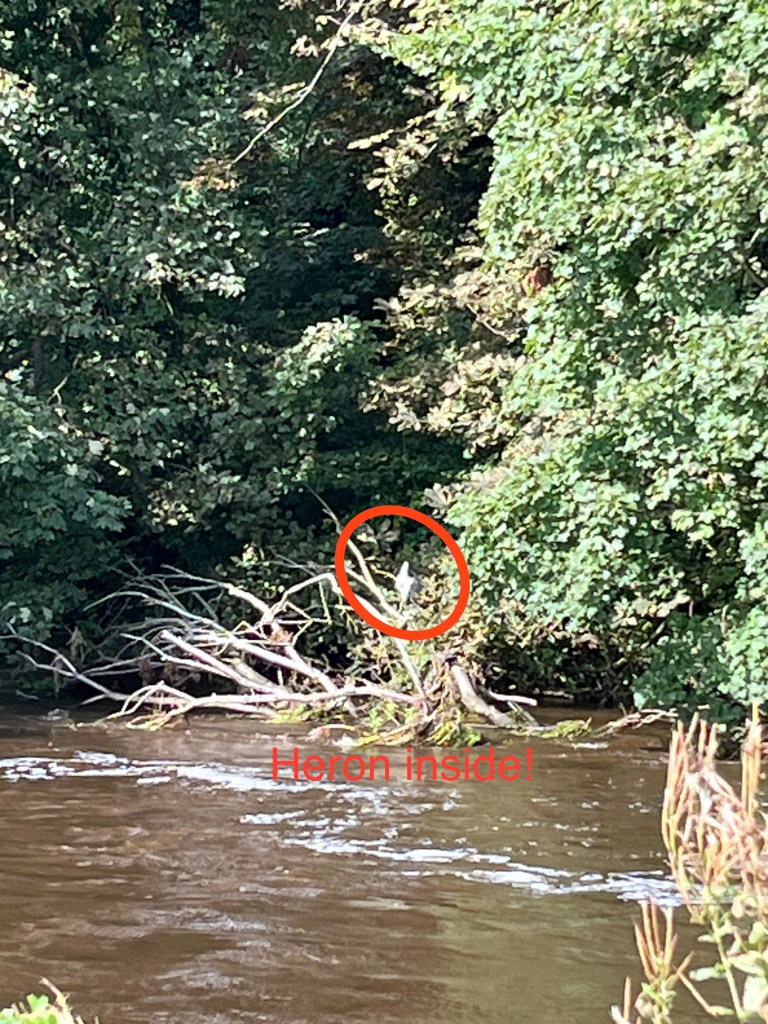
On my way there, I saw a heron preening in a dollop of sunlight:

Look carefully –the heron is inside the red circle on that half-submerged snag!

I was also enchanted by these little guys:

Water striders – Aquarius najas – I think!

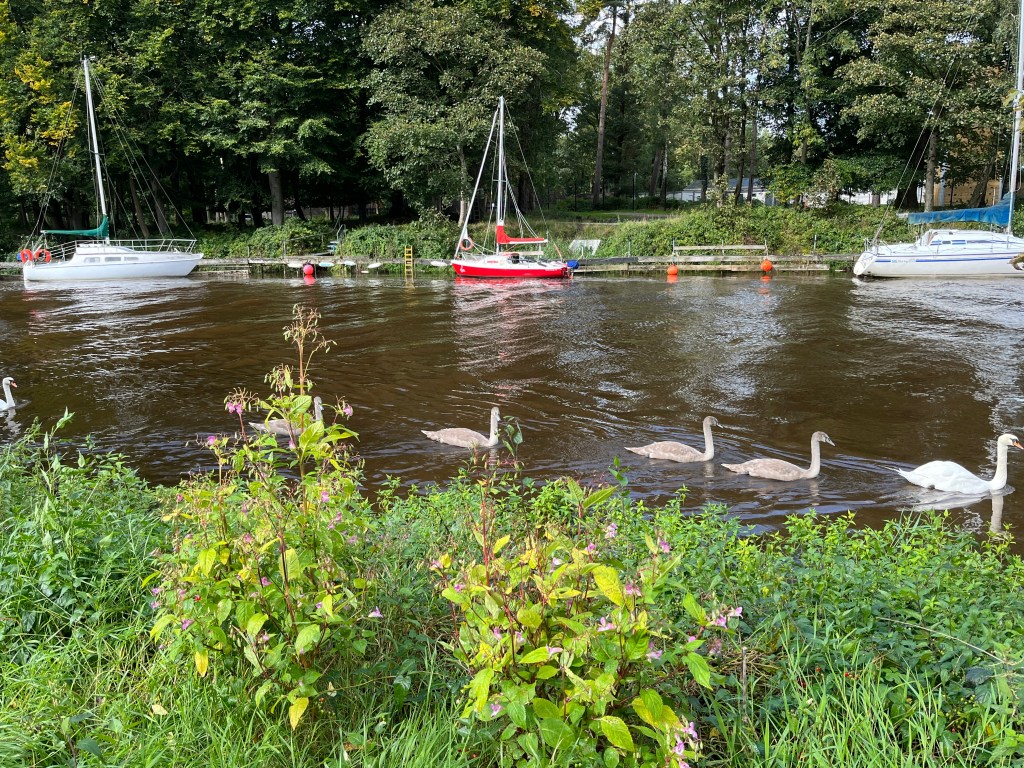
And I was delighted to encounter this graceful family:

I presume that’s the cob bringing up the rear.

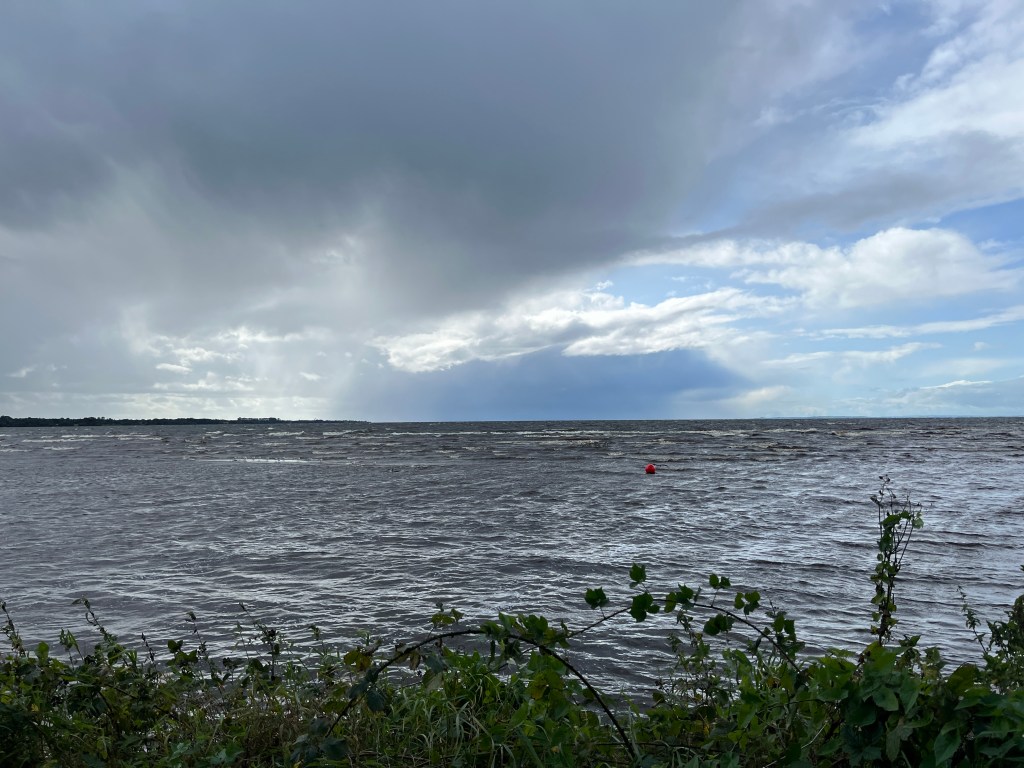
When I got to the mouth of the river, I was relieved to find no immediate evidence of the algal bloom. However, it was stormy day and the surface of the Lough was roiling like an ocean.

Near Joyce’s Gate pier

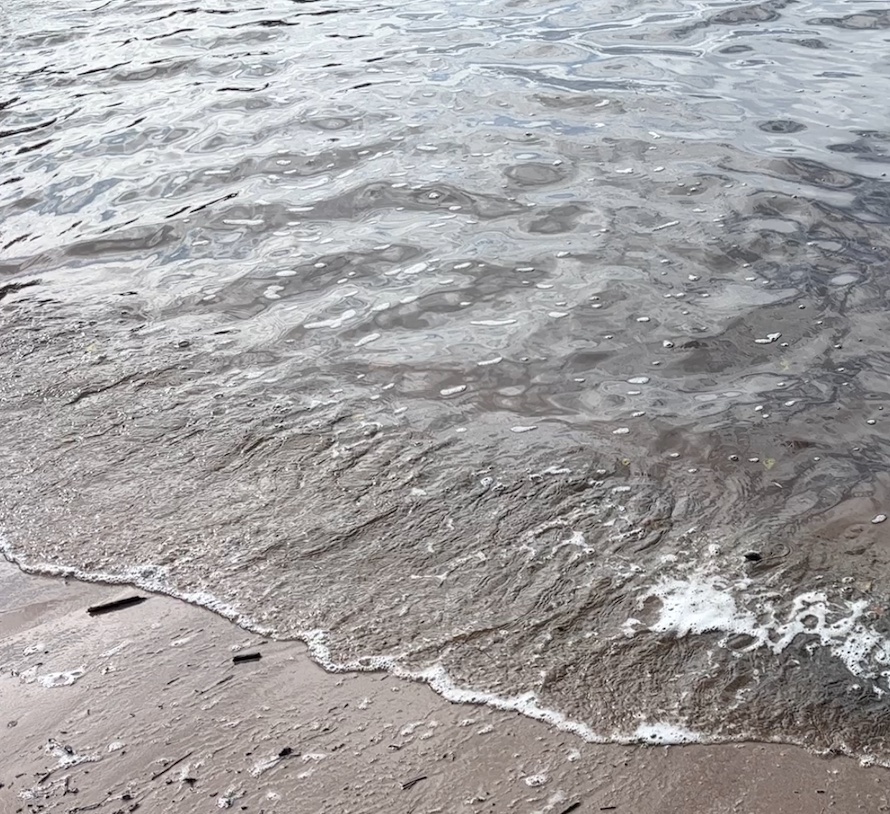
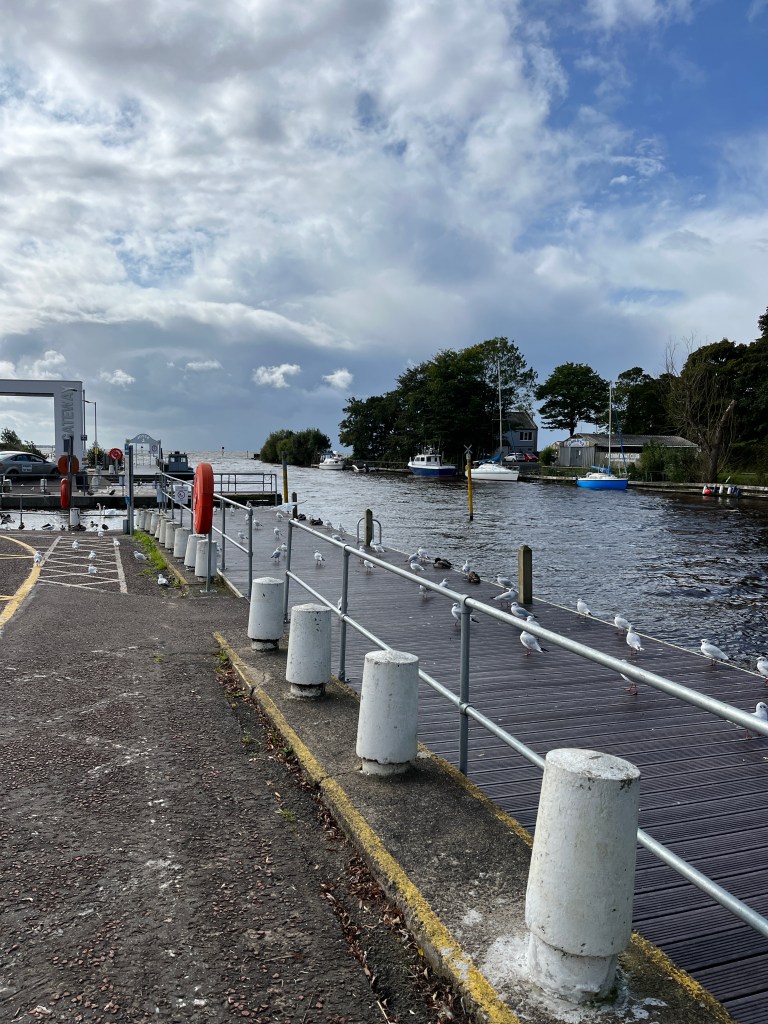
From the marina, the wind had whipped the surface of the Lough into a frenzy. At the small beach of a slipway, the water didn’t look too bad, and I dared to let myself think that the Lough was shaking the filth out of itself:

Not looking too bad …

I let myself hope too soon. As I walked on towards Rea’s Wood, a sour stench began to thicken through the wind’s turbulence. Like rotten silage.

The gloomy aspect was matched by the smell.

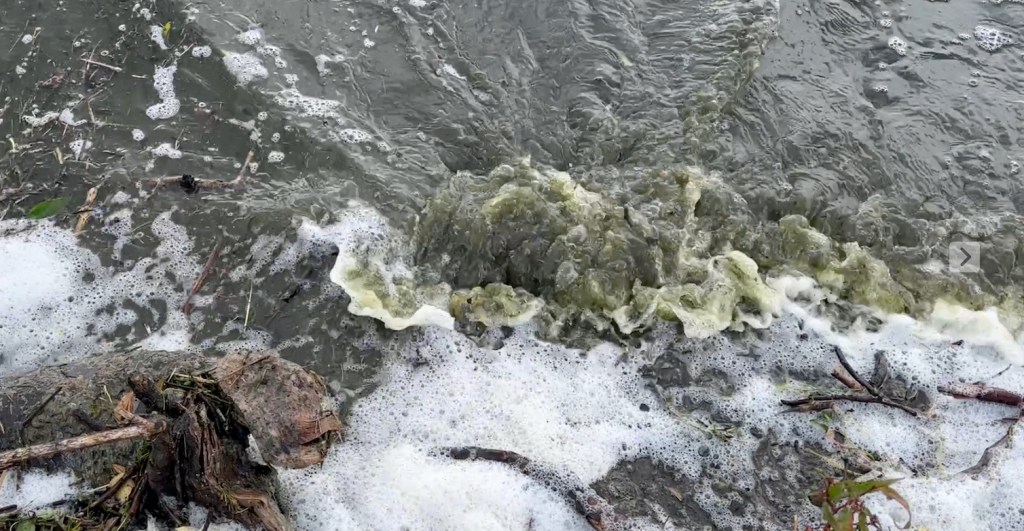
Before the woods closed around me, I slipped down onto another small lip of sand. The green tinge to the waves’ froth was unmistakeable:

Cyanobacteria, riding the waves

As temperatures fall and light decreases, and as the waters stir under the wind’s movement, there is a good chance that this contamination will reduce. But how much long can we rely on the Lough’s own regenerative powers, and the fortuity of the season to reduce this pollution. We keep pushing it, even to our own detriment.

We need more prayers and wakes. And we definitely need more action.

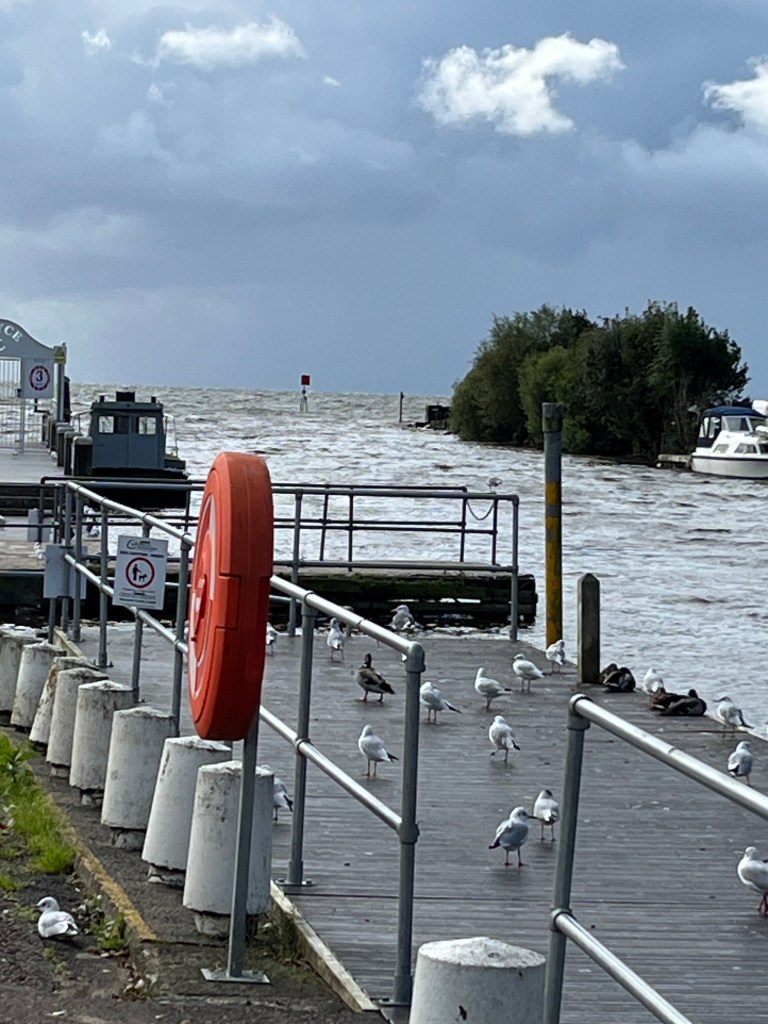
On the way back, I met the delightful Gareth Platt of Ringwatching Blogger fame, in the middle of his regular survey at the Antrim Marina. Thanks to Gary, that I saw my first med gull among the throngs of black-headed. Gary said to me that gull numbers were down by 50-100 gulls, probably because of avian flu.

A Mediterranean gull is somewhere amid this throng. Also a common gull with distinctly grey legs.

As if to confirm the signposted warnings, which had punctuated my route …

Depressing …

… when I got close to the end of my walk I found this dead hoodie. Of course I followed the advice not to touch it, and it might not have died of the flu. But prayers being all I’d access to, I said one for the repose of its corvid soul.

Such an ebullient species. So small in death.

Posted in Uncategorized | 1 Comment

Fermanagh Ospreys

I was dazzled to learn that ospreys are breeding in Fermanagh. The first in Ireland in 200 years. It threw me back a mere half century to my childhood, when as a member of the RSPB, albeit the Young Ornithologists Club (I still have my little kestrel badge somewhere), I read about ospreys nesting in Scotland. I think it was Loch Garten, but I’m not 100% on that. However, the idea that one day ospreys could be nesting down the road (I’ve no idea exactly where they are, obviously; but I like to imagine it somewhere near Castle Archdale) from my childhood home is heartening.

Maybe one day I’ll get to see them there. Now that would be a full circle.

Posted in Uncategorized | Leave a comment

Does this put a longing on you?

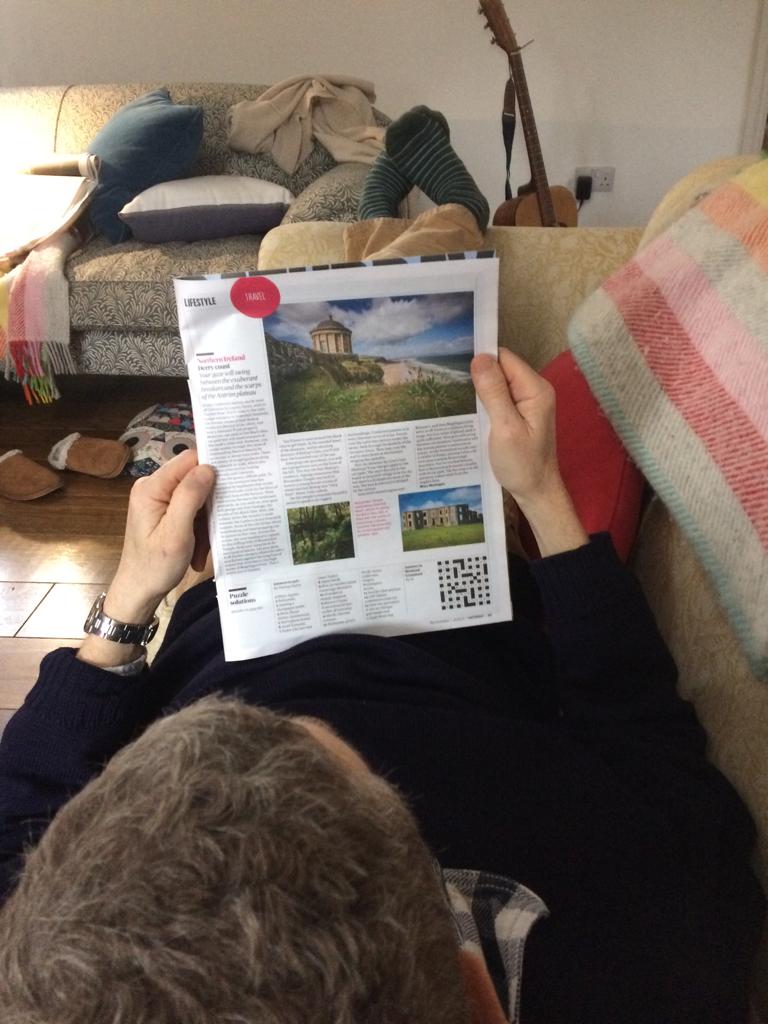
A friend sent me this photo from Saturday’s Guardian :

See? I have readers!

What’s holding his attention is this travel piece (last but not least of one of four featured walks) on the little bit of heaven that is the north coast between Castlerock and Benone.

With thanks to Andy Pietrasik, travel editor at The Guardian.

Posted in Uncategorized | Leave a comment

A gloater of berries

My latest Country Diary is about the Mistle Thrush. I tilted it towards its publication date – there’s a no-nonsense aspect to this species that eschews romance, or any kind of frippery. This is a species that “flings” its song as if its throwing down a gauntlet; or as Thomas Hardy said in The Darkling Thrush, a poem I’ve known by heart since my early teens, as if it’s flinging its soul. Certainly, there’s no holds barred.

Many thanks, as ever, to Paul Fleckney, editor of The Guardian’s Country Diary. And what a perfect photo!

Posted in Uncategorized | Leave a comment