
The spectacular exhibition of the Dinosaurs of China at Wollaton Hall has been on my to-do list for months. I read about it first in The Guardian, way back in July and it seemed particularly serendipitous that the fossils made accessible by this exhibition came to my attention in the very month that my poem ‘The Opposite Birds’ was published. This poem also features in a Lunar Poetry Podcast (go to minute 40:25 to hear me introducing and reading the poem).
That was swiftly followed by the Guardian publishing an article on a baby enantiornithine, so in the way of these things, it felt as if everything made seeing this exhibition a priority. But so many things got in the way that, in fact, it wasn’t until last Wednesday 18 October, I found my way to Nottingham, where I met with Dr Adam Smith (the benefits of a combined poetry and science background!), of the Natural History Museum that is located in Wollaton Hall. Dr Smith has been pivotal in bringing these fossils not only to the UK, but to Europe for the first time. He was extremely generous with his time and his detailed insights into the exhibits.
And what a coup they are. I have now seen an enantiornithine, from the genus Proptopteryx:
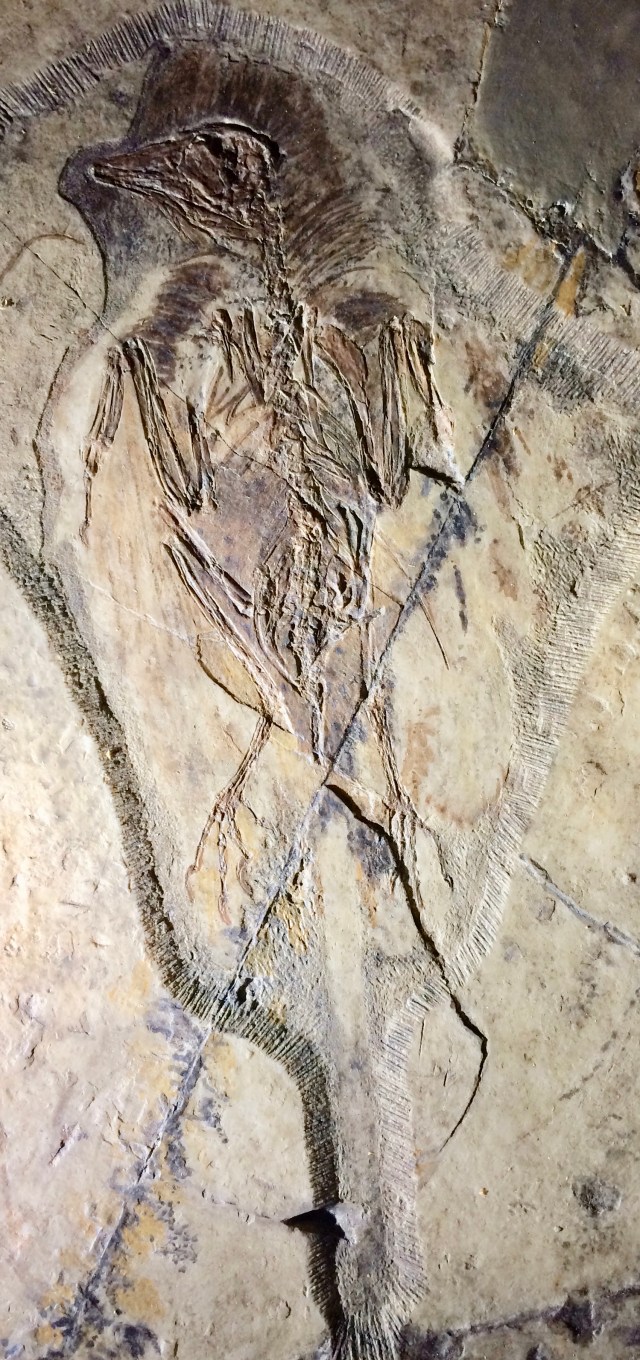
This little fossil is Proptopteryx feningensis, from the early Cretaceous, about 125 million years ago (mya). It’s somewhere between the size of a sparrow and a starling. The feather impressions are clearly visible around the head and neck. However, the lighting makes the tail feather impressions less clear in my photo than they are in the real thing, so below is the same fossil from the exhibition booklet with its accompanying diagram:
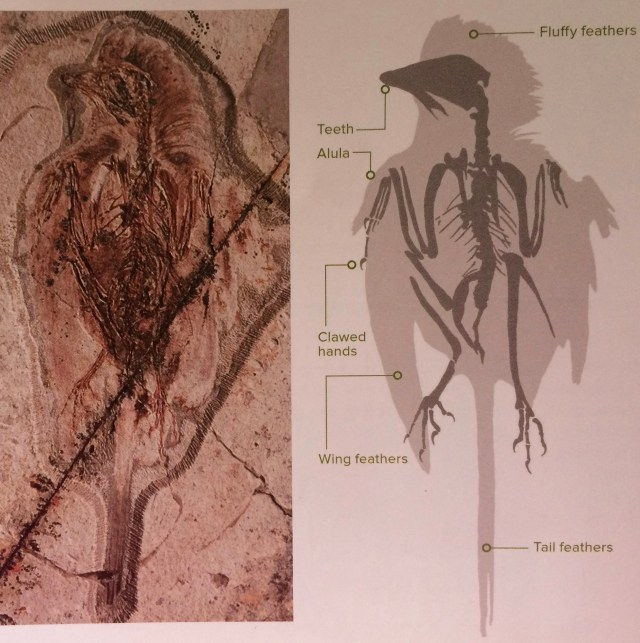
The identification of the alula in the diagram is significant because the alula (thumb/bastard wing) indicates that enantiornithes had achieved very fine control of flight. In modern birds, the alula is essential for manoeuvrability, and managing air flow around the wing to prevent stalling when slowing down or landing.
The star of the show for me, however, was Microraptor gui, (Cretaceous, about 120 mya). I can’t believe (neither could Adam!) that the Chinese lent this spectacular fossil, the holotype, the standard reference for the species. I have seen this fossil in photographs in books about bird evolution such as Dyke and Kaiser’s Living Dinosaurs or Feduccia’s Riddle of the Feathered Dragons, but I never dreamed I’d actually see the real thing myself. But there it was, about the size of a chicken, with the feather impressions of its four wings (on fore- and hind-limbs), for me to lay my own eyes on.
(It turns out the Chinese didn’t actually lend the whole thing. They held onto the teeth which are currently being examined by researchers).
The creature is so long (about 3/4 of its length is tail) that I couldn’t fit the whole thing into a decent photo (it turns out I’m not the world’s best photographer and confronted with the remains of these animals, I go into some kind of trance). So the first two photos are taken from the booklet, with close-ups taken by a gobsmacked yours truly.
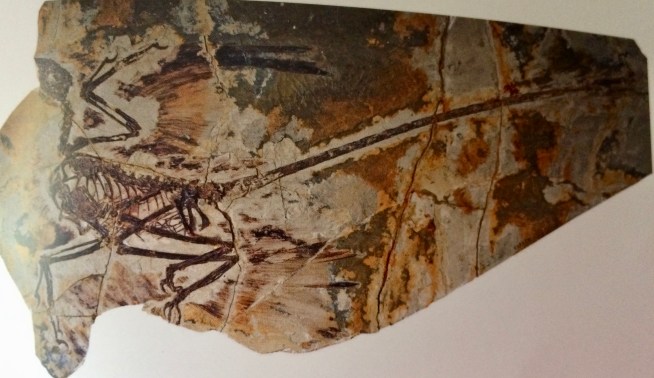
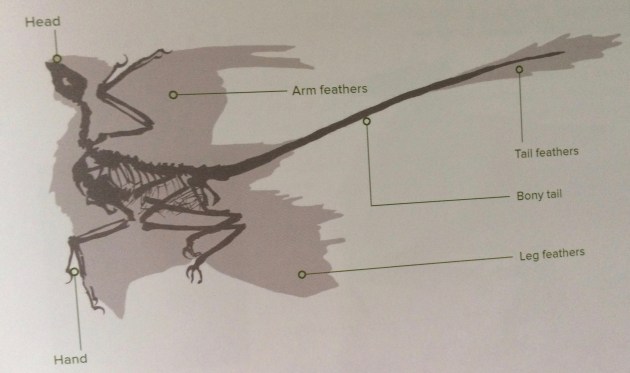


The dark feather impressions emanate from both fore- (above) and hind-limbs, as well as from the tail (below):
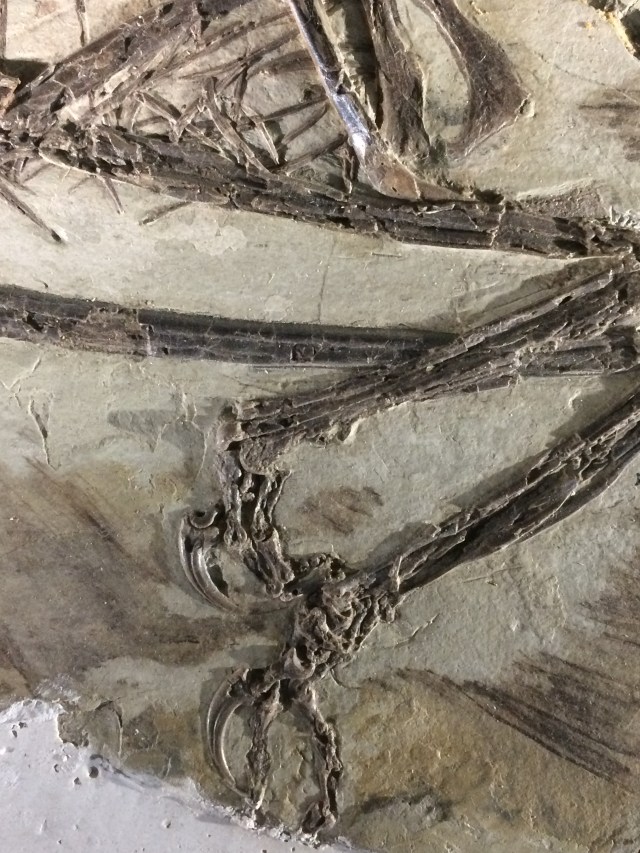
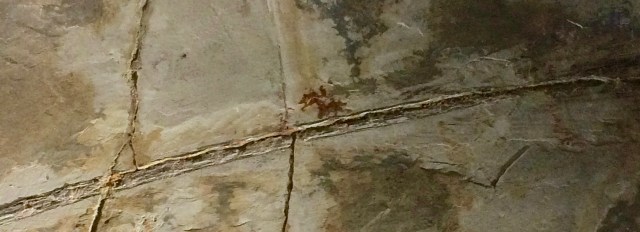
I can’t resist including the catalogue no. of this specimen …
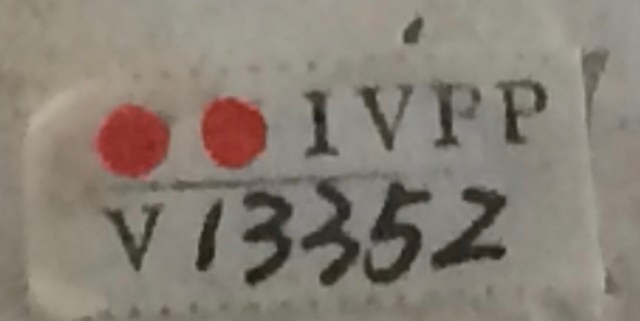
… that’s right, the IVPP!!! (Yes, I’m still a nerd!).
I was there to see the fossils with a view to eventually writing poetry about them (ie, not gushing too much about them here). But a couple of others were very striking. One was moving. Mei long, which would fit into the palm of my hand, is the sleeping dragon, a fledgling-sized Troondontid (although the specimen is thought to have been a young adult), curled up with its muzzle tucked under its forelimb, in typical sleeping posture of a bird. Which of course demonstrates a behavioural link between therapod dinosaurs and birds:

(This is a model – 3D print – of the original fossil)
There were other stunners, like Sinosauropteryx prima, which was the first feathered dinosaur ever described (1996), the one that showed that feathers can no longer be considered a sole characteristic of birds; that granted massive confirmation of the analysis by Thomas Huxley when he took issue with the C19 superstar anatomist, Richard Owen, over the latter’s description of Archaeopteryx and Compsognathus; and that kicked off the mid-1990s revolution in avian phylogeny that is still ongoing:
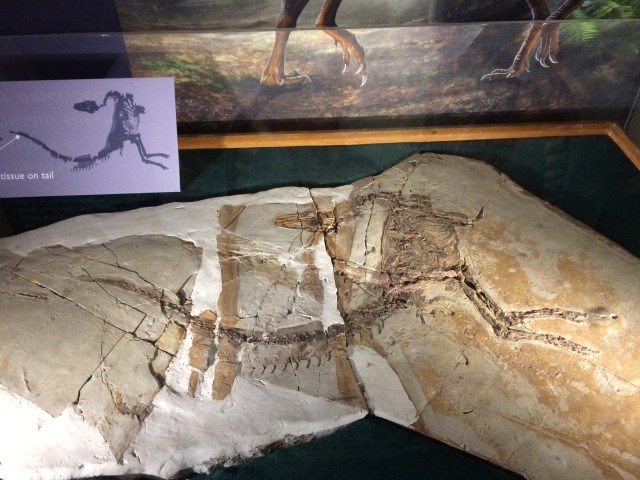
Caudipteryx dongi, with its spillage of gastroliths from its gizzard – like so many modern birds (alongside more feather impressions):
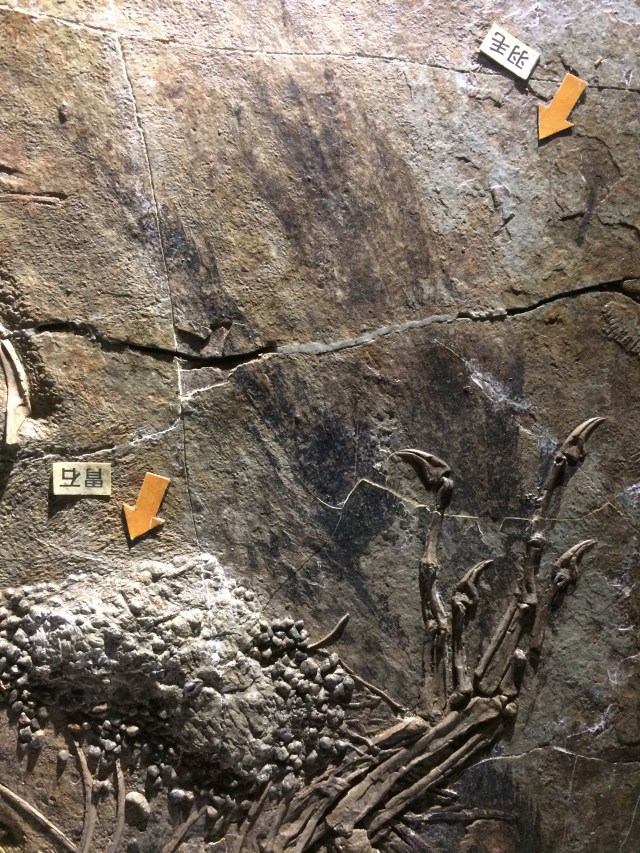
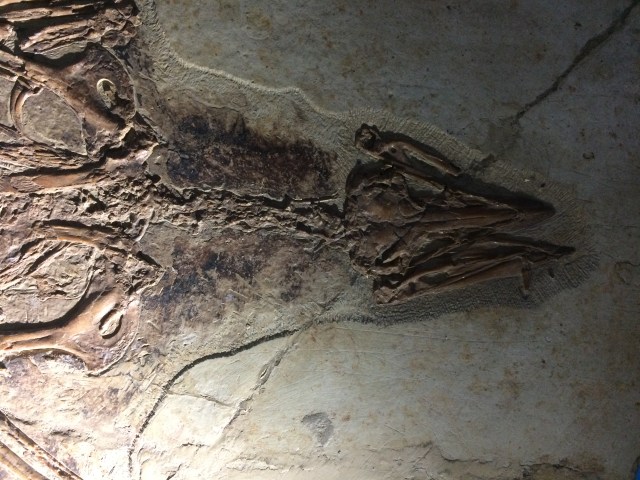
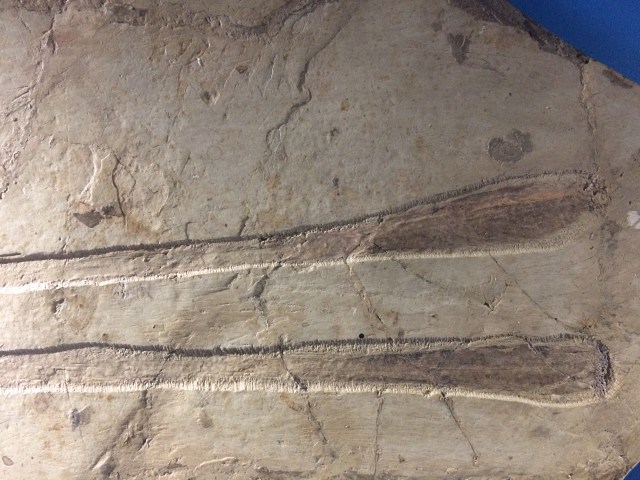
And my last one (for now!), Confuciusornis sanctus, that is one of the commonest fossils of the Jehol biota (Yixian Formation). It is not directly related to modern birds, but like them, it had a toothless beak, the oldest known bird to do so. Wonderful preservation of long tail feathers in approximately 50% of specimens have led scientists to conclude that the species was sexually dimorphic. The specimen on show in Nottingham was of course, a presumed male. (Well they always do get more attention!).
I left entirely exhausted by the dazzling variety and form. And somehow, perversely reassured that the fauna of the Cretaceous, so long gone, have something to teach us.
Thanks again to Adam, and to Martin, a volunteer at the exhibition, for all their time and attention. The additional insights and knowledge they gave me were brilliant.



 mary-montague.com